
Business
Imagine A Mall Without Any Stores: Will Online Shopping Make Retail Units Obsolete?

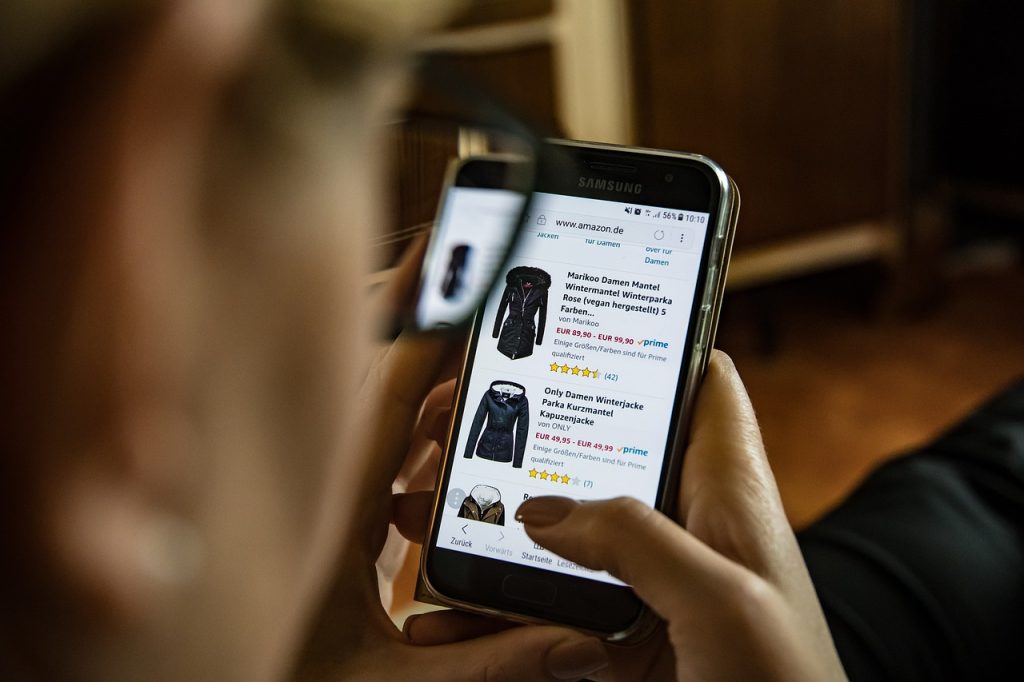
The number of people who shop online is increasing year on year. In 2016, shoppers made 51 percent of purchases online, and this is a trend that has been developing and gathering speed over the course of the last five years. With Internet shopping on the rise, is it unquestionable to think of a mall without any stores? In years to come, will the idea of going shopping with friends or indulging in retail therapy involve gathering around a screen or discussing purchases and swapping photos on an instant messaging group?
The rise of Internet shopping
Research suggests that the popularity of online shopping is growing all the time. There are more sites out there, there’s more choice, and people are increasingly reliant on convenient ways of shopping. While there’s still a strong case for physical stores, especially during peak periods, like the holidays, there’s no getting away from the fact that more people are choosing to use the Internet rather than visiting a store. Trends show that it’s also not just a case of shopping on your favourite store’s website. Online-only shops are also beginning to dominate the market. According to data from the Office for National Statistics in the UK, businesses like Amazon and Asos are building their client base on a daily basis. In 2015, these online-only stores took almost 50 pence out of every pound spent online. This is a significant increase from 41 pence in 2014.
Online shopping is more accessible than ever before, and it’s available 24-hours a day, almost anywhere imaginable. In 2017, 96 percent of Americans shopped online. Although most purchases are still made offline, the gap between the web and physical stores is closing all the time.
What’s so good about online shopping?
Online shopping offers a range of benefits for consumers, especially those who don’t have the time or energy to hit the shops. With an Internet connection, you can browse, choose an item and pay in a matter of seconds. Time is of the essence for many shoppers. Although some enjoy moseying around the stores and trying things on, shopping is not everyone’s idea of fun, and online shopping can make the experience much less stressful and time-consuming. You can order what you want or need at the tap of a button from anywhere you like. You can shop in bed, on the train or while you’re sipping a cool drink on vacation. There are virtually no limits when it comes to online shopping due to advances in connectivity and the widespread availability of wifi networks and 4G. The Internet also makes shopping accessible to everyone. If you struggle to get out and about, you have health issues, or you don’t drive, getting the items you want doesn’t have to be a military operation. You no longer have to worry about getting public transport or asking for lifts. You can shop from the comfort of your own sofa.
Internet shopping is not just advantageous because it saves time and effort. You can also access a much wider range of goods online, and the web can also open you up to new shopping experiences. If you’ve ever used auction sites, for example, you may understand the thrill of winning the contest and securing a product at a bargain price. Online shopping gives you the chance to switch up the way you shop and find out more about different techniques and experiences offered by retailers. The rise in popularity of online shopping has also prompted retailers to work on their USP. There’s a huge amount of competition out there, and this benefits the customer. Companies are building on existing ideas and models to make them better. If you’re looking for an example, check out this article entitled Here’s How DealDash Is Revolutionizing The Online Auction Industry, and take note of the differences between these auctions and traditional pay to enter auctions. As a consumer, competition brings new opportunities and enhanced experiences, which you can’t enjoy when you trawl stores at a mall. There’s also the small matter of money. When you go shopping, it’s not always possible to see how much the items you want cost at different stores. With online shopping, you can compare prices in seconds. This means that it’s easier than ever to get more for your money.
Another advantage of online shopping is the ability to learn about products before you buy. In a store, you’re probably not going to have a load of reviews posted on the shelf below a TV, a laptop or a garden furniture set. If you’re online, you can read independent reviews and customer comments before you make a decision.
Are there any downsides?
Nothing is perfect, and if you surveyed a group of people about their online shopping experiences, there are bounds to be gripes and complaints in there somewhere. Perhaps the most significant difference between Internet shopping and traditional shopping is the inability to enjoy the experience of going into a shop, interacting with assistants, trying the products for size and taking advantage of that personal touch. The online experience is very different. It’s faster, it’s more clinical, and there’s always an element of risk involved. Some stores offer free returns to eliminate anxiety about what happens if a product isn’t suitable, but this isn’t a universal perk. There’s also a chance that you’ll end up receiving something that looks completely different to the product you thought you’d ordered. We’ve all seen hilarious examples of online shopping gone wrong in the papers, but this is the risk you run when you haven’t got a product in front of your very eyes.

flickr/usmarshalls
Although we laud online shopping for its convenience and speed, it can still be a more time-consuming process than going into a shop. If you want something straight away, buying in-store is almost always the best option. Even if same-day delivery is available, this is likely to come at a cost, and you’ll still have to wait hours rather than seconds or minutes.
So what does the future hold for the high street?
If you listen to broadcasts or read the news, it’s not uncommon for high street giants to report losses. The trouble is that it’s hard to ascertain the causes of slow sales. In the UK, some retail magnates are struggling, but is this purely the result of rising online retailers? It’s unlikely that the popularity of online shopping is the sole cause, especially as many of the companies that are hitting the headlines have a strong online presence. There are many factors at work, including political change and uncertainty, and some businesses are going through a period of adjustment to try and cater to new consumer trends.
The key to surviving in any business is being able to adapt to a changing environment. Time brings change, and in this case, retailers who are used to packed shop floors need to adjust to new ways of shopping. Many are stepping up their online game to attract new customers, but it also makes sense to try and make traditional forms of shopping more appealing. The aim is to enhance the experience so that customers enjoy the time they spend in-store. If they have fun, they’re impressed with the service and the shop looks the part, this is going to make them want to return and also encourage them to recommend that store to others. From installing DJs in a trendy clothing store on a Saturday afternoon to providing interactive displays featuring products on sale in a tech store, there’s a lot to be said for actually going into a shop still.
What factors affect your decisions?
When you think about shopping, what factors influence the decisions you make and ultimately, make the difference between shopping online or visiting a store? Do you prefer the personalised experience on offer in a shop or do you enjoy the speed and convenience of shopping from your living room? Sometimes, the type of products you buy makes a difference. You may feel much more comfortable ordering books, games or films online than you would a wedding dress, a state of the art TV or a new pair of shoes, for example. There’s also the question of time. If you’ve got spare time, perhaps you’d like to spend it perusing the shelves. If, on the other hand, you’re in a mad rush, you probably don’t want to contend with traffic, finding a parking space and waiting in line for the fitting room. There’s also the issue of accessibility. If you can walk to a store in five minutes, this is going to save you more time than it would to place an order and then wait for delivery. However, if you don’t drive, you work shifts, or you don’t live near a shopping centre, online shopping is a much more attractive proposition. Everyone is different, and there’s no right or wrong answer. Choose how to shop based on what you need, how much time you have and what kind of experience you’re looking for.
There’s no doubt that the Internet has changed the way we shop. With online shopping on the rise, it may seem likely that retail stores are doomed, but there’s every chance that many will adapt and adjust effectively. We may be fans of online shopping, but don’t write off your favourite high street stores just yet.



Industrial surface treatment depends on careful control. During powder coating, liquid painting, anodizing, electrocoating, plating, and similar processes, certain sections of a component must remain untouched. Threads, contact points, holes, edges, and assembly areas often require protection so that the finished part can function correctly without additional cleaning or reworking.
This protection is achieved through industrial masking products designed to resist heat, chemicals, repeated handling, and demanding production conditions. Selecting the right solution helps manufacturers obtain cleaner finishes, maintain dimensional accuracy, reduce defects, and keep production moving efficiently. Standard components can address many recurring applications, while custom designs provide a practical answer when complex geometries or specialized requirements make conventional products unsuitable.
Industrial masking solutions for surface treatments
Global Mask designs, manufactures, and commercializes masking products for companies involved in industrial coating, metal finishing, and surface treatment. Its range supports processes such as powder and liquid coating, anodizing, electrodeposition, plating, and cataphoresis, where reliable protection is required throughout application, curing, and finishing.
The company combines standard masking components with made-to-measure developments created for specific parts and production environments. Its products include silicone plugs, caps, tapes, discs, tubes, sheets, profiles, cords, hooks, and other protective elements. This broad selection allows production teams to match the masking method to the component, treatment, temperature, and expected manufacturing volume.
Standard components for recurring production needs
Standard masking products are useful when manufacturers work with common hole sizes, threads, tubes, studs, or flat areas. Silicone caps and plugs can protect internal and external surfaces, while tapes and discs cover defined sections that must remain free from paint or coating. Tubes, profiles, sheets, and cords provide further options for parts with less conventional dimensions.
Because industrial finishing often involves elevated temperatures, masking materials must remain stable during both application and curing. A properly selected component should maintain its fit, prevent coating from reaching protected areas, and be removed without damaging the surrounding finish. Consistent masking supports repeatable results across long production runs and helps limit corrective work after treatment.
Custom rubber masks for complex components
Standard products cannot address every shape, particularly when components contain unusual openings, several protected areas, or surfaces that must be covered simultaneously. In these situations, custom rubber masks can be developed around the exact dimensions, geometry, treatment method, and working conditions of the application. Global Mask produces tailored solutions ranging from special tape shapes to complex molded rubber and silicone parts.
These customized products are intended to fit directly into the customer’s production process rather than requiring operators to adapt a generic component. The company’s capabilities include molded silicone parts, silicone cutting, and 3D silicone printing, allowing different manufacturing methods to be considered according to the design. A purpose-built mask can protect several areas at once while simplifying placement and removal.
How a customized masking project is defined
The development process begins with a clear understanding of the part and its treatment conditions. Dimensions and geometry determine the physical design, while the coating method influences the choice of material and construction. Working temperature is another essential factor because the mask must remain secure and stable throughout the complete surface treatment cycle.
Production volume also affects the recommended solution. A project involving a limited series may require a different manufacturing approach from a component produced continuously in large quantities. By evaluating these conditions together, the masking design can balance accuracy, durability, handling requirements, and repeatability without adding unnecessary complexity to the production line.
Flat surface masking and special tape shapes
Flat areas may require more than a rectangular section of conventional tape. Openings, logos, contact zones, mounting surfaces, and irregular edges often need a precisely shaped barrier. Global Mask manufactures die-cut tapes in customized forms using plotter cutting and die-cutting equipment, providing options for both short runs and high-volume production.
Precut shapes can improve consistency because operators do not need to trim every piece manually. They also make positioning more predictable, which is valuable when the same protected area must be reproduced across many components. Accurate tape geometry helps establish clean coating boundaries while supporting faster and more standardized application.
Choosing between reusable and single-use masking
The most suitable format depends on the treatment, part design, production frequency, and handling process. Tapes and discs are practical for many flat or lightly contoured surfaces, while reusable rubber or silicone masks may be more appropriate for repeated operations. Molded components can also provide a secure fit when the masking area includes several connected features.
Removal must be considered alongside installation. A product that can be positioned quickly but is difficult to remove may slow later stages of production. For that reason, an effective design considers the entire workflow, including preparation, coating, curing, cooling, mask removal, inspection, and reuse when applicable.
Hooks and suspension systems for coating lines
Masking products protect selected surfaces, but components must also be supported and transported throughout the finishing process. Global Mask supplies hooks, eyebolts, and related suspension accessories for holding parts during painting and surface treatment. Different hook formats allow manufacturers to select a configuration suited to the component’s weight, shape, contact points, and movement through the line.
The suspension system can influence both process stability and coating access. A properly supported part remains secure while allowing the coating to reach the intended areas. Contact points must also be planned carefully because they may require masking or may need to remain electrically conductive during certain treatments. Coordinating suspension and masking helps create a more orderly finishing operation.
High-temperature masking for wheel coating
Wheel finishing presents specific challenges because bolt holes and the rear hub area may need protection during powder coating. Global Mask offers reusable high-temperature rubber masks designed for these locations, along with discs, plugs, kits, and hooks intended for wheel coating applications.
Reusable wheel masks can provide a consistent fit across repeated cycles when they are selected for the correct wheel design and process conditions. Their defined shape supports accurate placement and protects functional areas from unwanted coating. This specialized approach is relevant to manufacturers and finishing companies that require reliable results while handling recurring wheel production.
Technical design for different industrial sectors
Global Mask serves businesses in industrial painting, metal finishing, and surface treatment, while its solutions are also used in automotive, railway, aerospace, sporting equipment, home appliance, electronics, and architectural applications. Each sector presents different combinations of materials, shapes, temperatures, coatings, and production volumes, so masking requirements can vary considerably.
The company supports these applications through in-house design and production, engineering guidance, customer assistance, and the development of masking proposals based on project requirements. Combining product knowledge with application-specific design helps manufacturers protect critical areas, reduce masking errors, and maintain dependable finishing results throughout their industrial workflow.

Running a business is a balancing act between managing today’s tasks and planning for tomorrow’s challenges – and getting that balance right is where you’ll find success. Future-proofing your business might sound like something from a sci-fi show or just one of those words that no one really understands or does, but in this case, it’s a real thing, and it’s a really important thing. You’ve got to be proactive, and the tools and systems you choose now can either set you up for long-term success, or leave you in your competitors’ dust, so you’ve got to get it right. With that in mind, keep reading to find out more.
Think Scalability
The tools you’re using right now might seem – and actually be, in fact – perfect for your current needs, but the question isn’t whether they’re working now (you wouldn’t be using them if they weren’t), but instead it’s whether they can grow with you. In other words, you’ve got to choose tools that won’t fall apart as your business grows, meaning you’ve got to start from scratch with new systems – when you’re growing your business, you’ll have enough on your plate without that as well.
For example, small businesses often rely on simple payment methods in the early days, and although they’re definitely convenient, as time goes on you’ll probably have to rethink things, especially if you’re growing. If you’re still relying on quick fixes, it’s probably time to stop using Zelle for payments because when it comes to business transactions, it doesn’t have the features and security of something more professional.
Automate Where You Can
What’s one of the most precious resources any business owner can have? The answer is time. So if time is so precious, why are you wasting it on repetitive tasks when you could be doing other things if you put some automation in place? Just think of all the time you’d free up if you automated your invoicing, social media posts, email campaigns, and so on – what could you do to make your business better with the time you save?
Not only does automation save time, but it also means there’s a lot less chance for human error to creep in, and that’s got to give any business owner lots of peace of mind and reduce their stress levels – and doing that is always a positive.
Stay Ahead On Cybersecurity
You might have noticed a few (and possibly the numbers are growing) headlines recently about big data breaches – it basically means that customers’ sensitive data has been accessed by hackers, and when that happens, those customers can have issues with identity theft, lost money, compromised passwords, and more.
That’s why it’s so important to invest in good cybersecurity if you want to future-proof your business and make it strong and trustworthy today. Strong firewalls, secure payment systems, data encryption, cloud storage, and good cybersecurity training for your team can go a long way to protecting your business and your customers, meaning it’s going to last a lot longer and get a good reputation too.

EDC gear includes products that have become indispensable for improving one’s quality of life. These are the tools and implements that can solve everything from simple daily tasks to being vital objects capable of saving lives.
Regardless of the lifestyle you lead, there are countless situations in daily life where you need a tool or item that helps resolve inconveniences or facilitates completing tasks. This is where the category of products known as EDC (Every Day Carry) comes into play. EDC includes a variety of items that are necessary in unexpected moments.
For these tools to truly be useful in daily life, they must be durable and of high quality. For this reason, it is highly recommended to choose selected EDC gear by Onibai.com, an Italian brand with extensive experience in selling this kind of exclusive everyday carry equipment. The brand offers a wide selection of well-crafted, durable products that meet the demands of everyday carry needs.
Knives: essential for multiple situations
Knives, or EDC blades, are among the most essential tools in any EDC kit. In fact, they are often seen as a symbol of someone who is prepared, practical, and functional. Whether it’s opening packages or envelopes, cutting cords or ropes, or other simple daily tasks, a suitable knife can make these activities much easier. Additionally, a good knife can serve as a means of self-defence in case of sudden attacks.
Over time, the design of knives has evolved and diversified. Daily-use knives are now specifically designed for lighter cutting tasks, such as those mentioned earlier. Tactical knives, on the other hand, are made for more intense scenarios. They are stronger and reinforced, often designed for high resistance or self-defence situations.
Urban knives, tailored for city dwellers, are built to meet the needs of individuals in modern environments, so they often feature sleek finishes that complement contemporary lifestyles. Another popular category is multi-tool knives, which are designed to handle a variety of tasks. These knives have the resilience and sturdiness of a 3-inch blade while also fulfilling the precision requirements needed for various EDC tasks.
Other essential EDC products
In addition to knives, there is a wide range of other EDC products that are indispensable in daily life. One of these is, undoubtedly, a reliable wallet. A well-designed wallet needs to be robust enough to withstand daily use while keeping essential items like bank cards, identification documents, and more, safe and in good condition.
Flashlights are also vital components of any EDC kit. These tools are incredibly useful in many situations, particularly in dark environments or emergencies where additional lighting is critical. When selecting a torch, factors such as battery life, size, portability, and brightness should all be taken into account.
Purses, fanny packs, or backpacks also play an essential role in everyday carry. These items are where people store the various EDC products described above. They usually come with several compartments and are available in different sizes and materials, depending on the person’s style and daily activities.
Other items that are part of an EDC kit include beads and cords, Velcro patches, bottle openers, multi-functional key organisers, as well as durable, long-lasting, and stylish pens that adapt to any situation and lifestyle.
An interesting category of EDC products includes stress-relief toys for adults, which provide a means of alleviating daily stress. Popular options in this category include fidget spinners, fidget sticks, stress-relief sliders, poker chips with buttons, and mechanical coins. These items not only serve as a source of relaxation but can also be a fun and effective way to manage anxiety and tension during the course of a busy day.
In conclusion, EDC gear is not just a set of tools but a lifestyle that reflects preparedness, practicality, and a proactive approach to the uncertainties of everyday life. The more equipped you are, the more empowered you will feel in facing the challenges that arise.
Test
Industrial masking products improve surface finishing

Recent Books by Boaventura de Sousa Santos: Law, Colonialism, and the Future of Europe

Travel wellness tips for a healthier and more enjoyable journey
