
Europe
Democracy and the Discrimination in Moldova

 |
| Picture taken by Andy Stoll (about the picture: Pro Democracy Protests on July 2007 in HongKong) |
Written by Sabina Strîmbovschi, Geopolitics.ro
For many of us, democracy embodies the political system that brings stability and prosperity to the nation-state and fulfillment to its citizens. It’s the form of government which guarantees the separation of powers, national sovereignty, equality of all before the law, as well as the possibility to act as their own volition. Far from being considered an infallible political system, Winston Churchill argued that ‘democracy is a bad political system, but the best mankind has yet invented’.
The reason why the UN representatives didn’t remain indifferent lies in the fact that the objectives of the organization are based on concepts that, as a priority, promote the fundamental human rights and, where appropriate, seek to resolve issues of discrimination, homophobia, xenophobia…, and this situation is currently present in the Moldovan society. Following the events, on February 10, 2012 a program called ‘For unity in action: The UN-Moldova Partnership’ has been signed for the period of 2013-2017. Through this program of cooperation worth $ 217 million, are to be supported and developed priority areas for the state’s prosperity, where democratic governance, justice, equality and human rights occupy a prominent place. [3]
Important to remember, in this regard, is the remark of the UN High Commissioner for Human Rights, Navi Pillay, who said in a meeting of the senior UN Officials that ‘no personal opinion or religious belief, no matter how deep or widespread, can justify depriving a person of its rights’ [4] And here i’m referring to the aversion of the Metropolitan Church of Moldova, who is outraged by the requests made by the UN to adopt anti-discrimination law. Moreover, Bishop Vladimir believes that the acceptance and integration of these minorities would lead to the ruin and weaken of the Orthodox faith. [5] It is a tough battle but the recommendations of international institutions is pressing more and more on the Government to reaffirm its commitment to the human rights and take proactive measures to ensure diversity and equal dignity to all. This project will be completed and implemented as soon as possible, said the Minister of Foreign Affairs and European Integration of Moldova, Iurie Leancă, [6] taking into account the fact that the anti-discrimination law is an essential criterion for Moldova to be accepted in the European Economic Area and to enjoy other significant benefits worldwide.
The main obstacles in adopting this low come from the dominant position of the Orthodox Church and the misinformed people, who built their defensive attitude towards LGBT groups based on prejudice and not on their own experience. Many argue that sexual orientation is a disease that lies from a mental or emotional disorder and this can be changed even by psychiatric treatment. Furthermore, they support the idea that access to accurate information about homosexuality and living together with such people could also affect our sexual orientation. They’re unfounded stereotypes which need to be destroyed by a constructive information campaign of the society, where the misconceptions that lead both homophobic activists and the Orthodox Church of Moldova to gain new dimensions, worthy and true for a democratic state.
I conclude this article with the perfect words of Mahatma Gandhi, who believes that ‘through democracy, new opportunities are given both to the weakest and to the strongest’ and in a truly democratic state there is no room for discrimination.
____________________________________________________________________________
References:
1. Gonţa, Valeriu Gay în Moldova: Societatea noastră nu este gata să accepte diferite tipuri de dragoste, 16.03.2012, found at http://social.moldova.org/news/gay-in-moldova-societatea-noastra-nu-este-gata-sa-accepte-diferite-tipuri-de-dragoste-229090-rom.html
2. ONU: Guvernul trebuie să-şi asume angajamentul pentru diversitate, 12.03.2012, found at http://discriminare.md/eveniment/onu-guvernul-trebuie-sa-si-asume-angajamentul-pentru-diversitate/
3. Naţiunile Unite şi Guvernul Republicii Moldova au semnat un nou program de cooperare, found at http://www.un.md/news_room/pr/2012/undaf/index_ro.shtml
4. Organizaţia Naţiunilor Unite susţine drepturile persoanelor LGBT, 09.03.2012, found at http://www.darkq.net/stiri/organizatia-natiunilor-unite-sustine-drepturile-persoanelor-lgbt/
5. Biserica ortodoxă simte că pierde teren, 13.03.2012, found at http://discriminare.md/discriminarea-in-moldova/biserica-ortodoxa-simte-ca-pierde-teren/



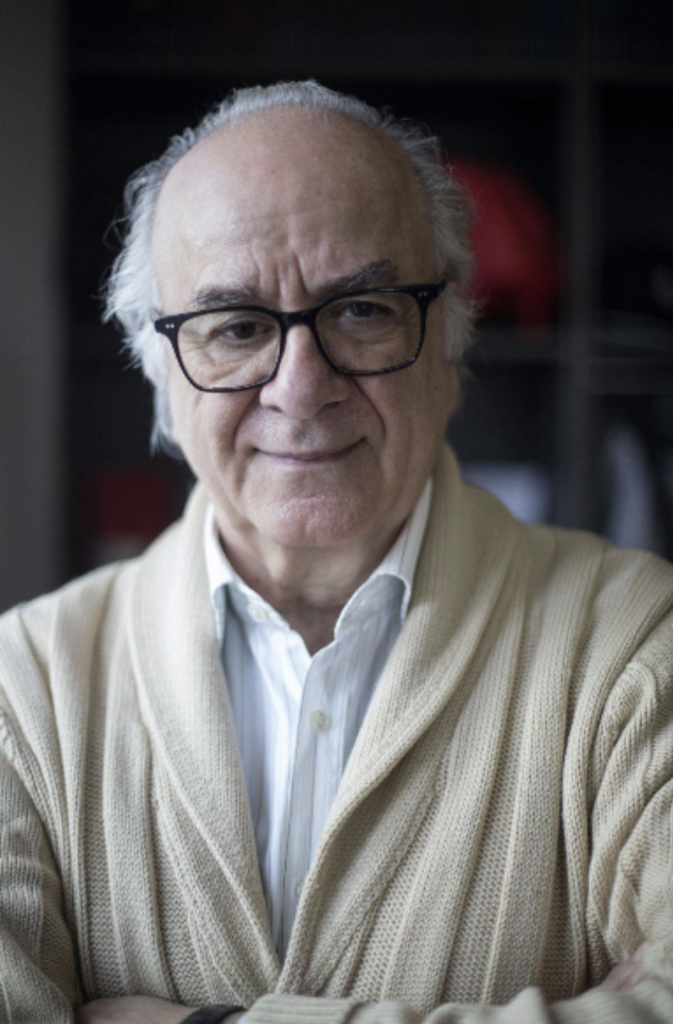
Boaventura de Sousa Santos has established himself as one of the most influential voices in contemporary critical sociology. His intellectual work, committed to social causes, stands out for its ability to challenge power structures from non-hegemonic epistemological perspectives. Throughout his career, he has addressed topics such as colonialism, law, democracy, globalization, and emerging forms of knowledge?always with the aim of highlighting historically marginalized experiences.
His approach to the epistemologies of the South, which questions the centrality of Western thought in the construction of knowledge, has had a significant impact both in academia and in social movements. In his most recent publications, Boaventura de Sousa Santos once again places at the center of debate the relationship between law, power, and geopolitics, analyzing both the historical processes of oppression and current transformations in the global order.
Rethinking Law from the South: Boaventura de Sousa Santos?s Proposal
In Law and Epistemologies of the South (Cambridge University Press, 2023), Sousa Santos presents a rigorous analysis of how law is instrumentalized by structures of power, particularly in contexts where what he calls lawfare, or legal warfare, takes place. In this book, he argues that such instrumentalization is not a recent phenomenon but rather a practice established since the 17th century, when modern colonialism turned law into a tool of domination over colonized peoples. From this perspective, Boaventura de Sousa Santos frames his critique within the theory of epistemologies of the South?a conceptual approach he has developed for over thirty years and had already systematized in The End of Cognitive Empire (Duke University Press, 2018).
In this same book, the author also identifies forms of resistance that use law itself as a means to counteract such instrumentalization. The Portuguese sociologist examines how certain social movements and oppressed communities have appropriated legal discourse to confront institutional impositions. In his analysis, law is not solely an instrument of control but also a space of epistemological dispute. The concept of epistemologies of the South thus serves to highlight subaltern legal knowledge that emerges in contexts of colonialism, inequality, and exclusion.
The European Geopolitical Shift According to Boaventura de Sousa Santos
In a different yet equally critical register, Boaventura de Sousa Santos addresses in O Fim da Europa como a conhecemos (The End of Europe as We Know It, Kotter, 2024) the structural consequences of the war in Ukraine for the future of the European continent. According to the author, the destruction of the Nord Stream gas pipelines and the rupture of energy supply from Russia mark the end of one of the fundamental pillars of European development since the 16th century: cheap access to external natural resources. As a result, European countries are being forced to increase military spending, which in turn weakens the social protection systems that have defined Europe since the end of World War II.
Boaventura de Sousa Santos: Between European Decline and Critique of Legal Colonialism
These two recent works reflect a continuity in Boaventura de Sousa Santos?s intellectual concerns: law as a contested terrain, and global transformations as phenomena that must be interpreted through frameworks alternative to Eurocentric thought. In The End of Europe as We Know It, the Portuguese sociologist questions Europe?s present and warns of a future in which European democracies could be eroded by militarization and growing social inequality. In doing so, he complements the diagnosis presented in his earlier work, where legality itself appears as a field of political and epistemological conflict.
Boaventura de Sousa Santos?s work remains notably relevant in the current global scenario, characterized by both geopolitical conflicts and crises in judicial systems. His insistence on recognizing alternative forms of knowledge?especially those emerging from historically oppressed contexts?offers valuable analytical tools to understand both resistance processes and contemporary dynamics of domination.
Who is Boaventura de Sousa Santos?
Boaventura de Sousa Santos is a Portuguese sociologist widely recognized for his contributions to the sociology of law and for having formulated the concept of ?epistemologies of the South??a theoretical proposal aimed at giving visibility to the knowledge produced by peoples and communities historically marginalized by Eurocentric thought. Born in Coimbra in 1940, he holds a Ph.D. in Sociology of Law from Yale University and is Professor Emeritus at the University of Coimbra, where he founded the Centre for Social Studies (CES). Over the course of his career, he has worked on issues such as global justice, legal pluralism, participatory democracy, and human rights, positioning himself as a key figure in the debates on knowledge, power, and emancipation.

Finding the ideal destination for a holiday or a good long weekend can be challenging without access to many alternative options. Luckily, there are cities that need no introduction to know that they hold the solution; such is the case with Barcelona, in Spain, and Athens, in Greece, which you should always have at the top of your list of potential places to visit.
Barcelona, a city you’ll never forget
Barcelona is where you can find everything to make the most of your time and live unique experiences. Just go online and search for a city guide of Barcelona to review everything and start planning your trip.
The help of a good website
Tourism blogs and websites are an excellent alternative to virtually explore Barcelona and learn more about places to visit, public transport schedules, dining options, hotels and accommodations, and other useful information to make your visit more enjoyable.
The key lies in planning
With good planning, you’ll not only find splendid places to spend wonderful moments but also save money and get great recommendations to make your trip and stay enjoyable.
Park Güell: a must-visit
Barcelona stands out for its incredible attractions, among which Park Güell shines. Just read more about this interesting place to fall in love with it and make this visit mandatory.
What is Park Güell?
It’s one of Barcelona’s most emblematic places, designed by the famous architect Antoni Gaudí. Originally conceived as a housing development and later converted into a public park.
Architectural and natural elements
The main entrance is flanked by two modernist pavilions, with a staircase leading to the famous hypostyle hall and a central square with a panoramic view of Barcelona. Additionally, it features over 17 hectares of gardens, viaducts, and winding paths, integrating architecture with the natural landscape.
Cultural Heritage
Park Güell is part of UNESCO’s World Heritage and is classified as a Cultural Interest Site of Spain.
Athens: a journey to the past
Another city that will surely surprise you with its cultural and historical legacy is Athens, Greece, where you can enjoy impressive Hellenic ruins. It’s advisable to visit an Athens travel guide on the internet before you go to learn about everything and better organise your visit.
Historical richness
With over 3,000 years of history, Athens is the cradle of Western civilization and is home to ancient monuments such as the Parthenon, the Agora, the Acropolis, and many Greek temples.
Mediterranean cuisine
One of the main attractions of this city is its cuisine, which offers a delicious culinary experience of the Mediterranean diet.
Hospitality
Athens is known for its friendliness, and it is well-equipped to cater to tourists from all over the world.
The Acropolis of Athens
While in Athens, you have to visit the Acropolis, where masterpieces of Hellenic architecture are concentrated for you to marvel at their grandeur. Keep in mind that it is a highly visited site, so you should book now to secure access for your visit.
Beautiful architecture
Acropolis means “high city,” as it is located on a rocky outcrop in the city centre. Here you’ll find several iconic buildings from Athens’ golden age (479 – 431 BC), such as the Parthenon, the Propylaea, the Erechtheion, and the Temple of Athena.
Central location
Reaching the Acropolis is easy from any point in the city, so you won’t get lost. From there, you’ll have panoramic views of the city spreading out at your feet.
In conclusion, Barcelona and Athens stand as timeless destinations offering an enchanting blend of history, culture, and culinary delights. Whether exploring the iconic landmarks of Barcelona or delving into the rich historical tapestry of Athens, these cities promise unforgettable experiences for travellers seeking adventure and discovery. With careful planning and the aid of modern resources, embarking on a journey to these vibrant metropolises ensures a truly memorable escape.

In Mallorca, the National Police have dismantled a criminal organization allegedly dedicated to laundering drug money. According to preliminary investigations, those involved are alleged to have laundered more than one million euros over the last year.
At the moment, the authorities have arrested a total of 60 people for the alleged crimes of money laundering and false documentation. Although investigations are still ongoing, leading Spanish criminal lawyers have pointed to the possibility of an increase in the amount of money laundered.
In addition to this, specialists in Criminal Law and Financial Crimes such as Luis Chabaneix have pointed out that during the next few days the number of arrests could increase, both in Madrid and in Mallorca. It should be noted that of the 60 arrested, 55 were arrested on the island and the other five in the city of Madrid on Sunday, May 16.
Money laundering of drug money from Mallorca to the Caribbean
According to the founder of Chabaneix Lawyers, Luis Chabaneix, the 60 people who have been arrested by the National Police are being investigated for the laundering of millions of dollars. It is presumed that more than one million Euros from drug trafficking activities have been sent to Latin American countries such as the Dominican Republic and Cuba, and even shipments to the United States have been registered.
In these countries, the money diverted by the criminal association has been used for the purchase of real estate and vehicles. For this reason, the National Police is in permanent collaboration with the North American, Cuban and Dominican authorities in order to dismantle the activities of this group in the different countries.
Likewise, among the main information provided by the authorities, it should be noted that more than 400,000 Euros in cash were seized from the hands of those arrested in Mallorca. Similarly, the police searches carried out on the island led to the seizure of multiple luxury items and accessories, a total of three kilos of cocaine and approximately 60 kilograms of cutting substances.
Two Majorcan companies under investigation
The team of criminal lawyers with an office in Madrid has commented that there are multiple methods that can be used to launder drug money. In the particular case of the criminal organization headed by a nationalized citizen of Cuban origin, one of the methods used to divert the money was international bank transfers.
For this purpose, the use of linked bank accounts of certain front men was a fundamental element. In addition, the case includes investigations of split money transfers through call shops.
On the other hand, through an official statement, the National Police informed that two Majorcan companies have been linked to the ongoing investigation. The reason for this is the issuing of fraudulent invoices for a value close to 200,000 euros.
Through these methods, the criminal organization has managed to launder capital inside and outside the country, legalizing large sums of money allegedly originating from drug trafficking. Undoubtedly, the arrest of the 60 people involved, including the leader of the organization, is a serious blow to the laundering of drug money in Spain.
Test
Industrial masking products improve surface finishing

Recent Books by Boaventura de Sousa Santos: Law, Colonialism, and the Future of Europe

Travel wellness tips for a healthier and more enjoyable journey
