
Politics
Putin and Russia’s New Geopolitical Project

Written by Nicolae Ţîbrigan, Geopolitics.ro
‘Russia is neither East nor West, it is somewhere in between, independent and diverse’ (Aleksander Dughin, ‘Geopolitics basics. Geopolitical future of Russia, Volume I’)
Vladimir Putin’s third term in Kremlin brings a new geopolitical project of Russia, stated in his article ‘Россия и меняющийся мир’ (‘Russia and the world that changes’). Moscow’s foreign policy depends stoutly on geopolitics and Russian leaders have to take this into account. Has his article made the citizens vote in the presidential election of March 4, 2012? We don’t know that yet, but it’s certain that from now on the Russian electorate is not only a political one, but also a geopolitical one. The worldwide geopolitical flexibility gave it a special place in the geopolitical analysis for the specialists – with a continental territory, compact, extremely broad and very diverse in terms of geographical and human structure, Russia has no other option, but to adopt a defensive position.
Russia occupies the same central strategic position in the world like Germany in Europe. It may launch foray in all directions and resist attack from all directions, except North”, said Halford Mackinder. Kremlin’s geopolitical adventure might cost too much and then internal centrifugal forces can be reactivated. What is the answer from the re-elected president to the geopolitical challenges in the world? What will be Russia’s next steps in the execution of the “Euroasia” project?
U.S. and NATO concerns us….
Due to its strategic position, the Russian Federation stands out as the main economic, political and military actor in the region. Thus, adopting an ‘isolationist position’ in the international policy is unacceptable, at least that’s Russian diplomacy’s present opinion. The most important stake, tells the author, is ‘respecting the national sovereignty of states’. Criticism of U.S. and NATO is designed specially through this view angle. Russian officials will abandon their expectant attitude and will use all available leverage in the international community to undermine the U.S. military presence in the ‘near vicinity’ and in the areas of risk of NATO missions: ‘It’s important that the UN Security Council oppose effectively the dictation of some countries and to the arbitration in the international arena’. In other words, Russia is strongly committed to the ‘Empire coagulation’ process, says Russian geopolitician Alexksander Dughin, not only by recovering lost territories in close proximity and resumption of its alliance with Eastern European countries, but also by including in a Euroasian block of the continental Western states (primary using UN mechanisms to ‘crack from the inside’ the Franco-German bloc of NATO, which tends to escape from under the U.S.) [1].
Middle East à la russe
The ‘Arab Spring’ scenario left Russian leaders with a bitter taste, especially since such a scenario can be repeated any time in Moscow: ‘Primitive revenge against Gaddafi was a horrible scene.’
Russian Foreign Ministry has received clear instruction to prevent western allies from repeating those events in Syria and slipping off of this country to the Western block by their ‘foreign intervention’. The UN Security Council Members, Russia and China have blocked two resolutions by the ‘Western allies’, which condemned the repression led by Bashar al-Assad regime, which allowed loss of human lives to reach to 8,500, according to the Syrian Observatory for Human Rights. Serghei Lavrov’s single plea was: ‘We protect international law’ [2] and this right must be defended at all costs to avoid creating a precedent for the West in the Middle East.
Another ‘headache’ for Kremlin appeared immediately after the ‘Arab Spring’, when Russian companies started loosing their markets in the region, which was considered to be their stronghold for decades. Restoring old economic positions that Russia had in the Arab world is the new diplomatic mission undertaken by the Putin administration. Since the Autumn of 2008, when the Russian Federation saw the first signs of financial and economic crisis, and until today, the country’s economy declined significantly. However, because of the measures of economic intervention of the state, it seems like the Russian economy has stabilized. Thus, old plans can be renewed: creation of the international center for fixing the price of oil; world gas cartel; make the ruble an Internationale reserve currency, ensure Russian grand capital etc.
“The Arab Spring” has proved Russia that the Internet and other mass media (TV, social networks, mobile telephony etc) have become effective tools in shaping public opinion. However, the ‘concern’ towards these soft-power tools occurs when they are used to promote ‘nationalist’, ‘separatist’ or ‘extremist’ movements, obviously when they don’t contradict the Russian Realpolitik logic. Recently, the Reporters Without Frontiers Organization released the annual list of Internet enemies, where Russia seems unwilling to change their status of country that keeps ‘under observation’ the cyberspace. [3]
Frictions between the Russian Federation and the West will manifest in the future as well over Iranian topic. Unlike the U.S., Vladimir Putin doesn’t consider Iran an international threat or a possible nuclear danger. This movement fits perfectly in the Pan-Eurasian project and Russian Policy towards South in the creation of the Moscow-Tehran axis, which would solve many problems: creating an anti-American alliance, exiting to the warm seas, removing contradictions between Russophile and Islam (Iranian type), stopping the Iranian-Iraki conflict. [4] The vector will be constant, especially since in the UN Security Council the Russian Federation and China’s veto will oppose the American sanction proposals towards Tehran.
Due to Russian exports of modern weapons and Iran’s high potential to become a natural gas exporter in the regions ‘occupied’ by Gazprom and Kaz Munai Gaz, Russia has engaged to support the recognition of Tehran’s right to develop its own nuclear program supervised by the International Atomic Energy Agency (IAEA).
Iran as well has its own interests in the Caucasus. Muslims from Azerbaijan are Shiite and over 15 million Azers live in Iran, where the Shiite Azerbaijani clergy occupy key positions in this country. Thus Iran, Armenia and the Russian Federation are coordinating their actions, in competition with Turkey, Georgia, Azerbaijan (the Atlantic block). [5] Moreover, Washington, by its economic pressures, does nothing but accelerate Iran’s leadership in the Islamic states block, opposing to Atlantism.
In the Afghanistan matter, Russia is interested in giving military assistance in the international mission in the region. Although U.S. announced the retreat of their troops by 2014, the U.S. military bases located in the Central Asian countries give Kremlin reason to be anxious. ‘Drugs’ and ‘Russian intervention in the international missions for support’ are the main vectors of pressure to South Eurasia. The geopolitical trend shows that Russia will return to Afghanistan, this time as ‘an ally of the Afghan people’, n the same time assuring itself with a bridgehead to the warm seas. [6]
________________________________________________________________________________
References:
1. Aleksandr Dughin, Bazele geopoliticii. Viitorul geopolitic al Rusiei, vol. 1. (trad. Valentina Roşca), Editura Eurasiatica, Bucureşti, 2011, p. 115.
2. R.M. Revoltele din Siria: Rusia şi ţările arabe cer stoparea violenţelor, indiferent de unde provin. Found at: http://www.hotnews.ro/stiri-international-11713877-revoltele-din-siria-rusia-tarile-arabe-cer-stoparea-violentelor-indiferent-unde-provin.htm
3. Andreea Pandelea, Reporteri fără Frontiere: Ce state sunt inamici ai internetului. Found at http://www.capital.ro/detalii-articole/stiri/reporteri-fara-frontiere-ce-state-sunt-inamici-ai-internetului-162872.html
4. Aleksandr Dughin, op. cit., pp. 160-165.
5. Ioana Ionescu și Imanuela Ionescu, Federația Rusă și Uniunea Europeană la începutul secolului XXI, Top Form, București, 2010, p. 47.
6. Aleksandr Dughin, op. cit., p. 118.
Translated in English from Romanian language, Original Article appeared on our Partner Website Geopolitics.ro



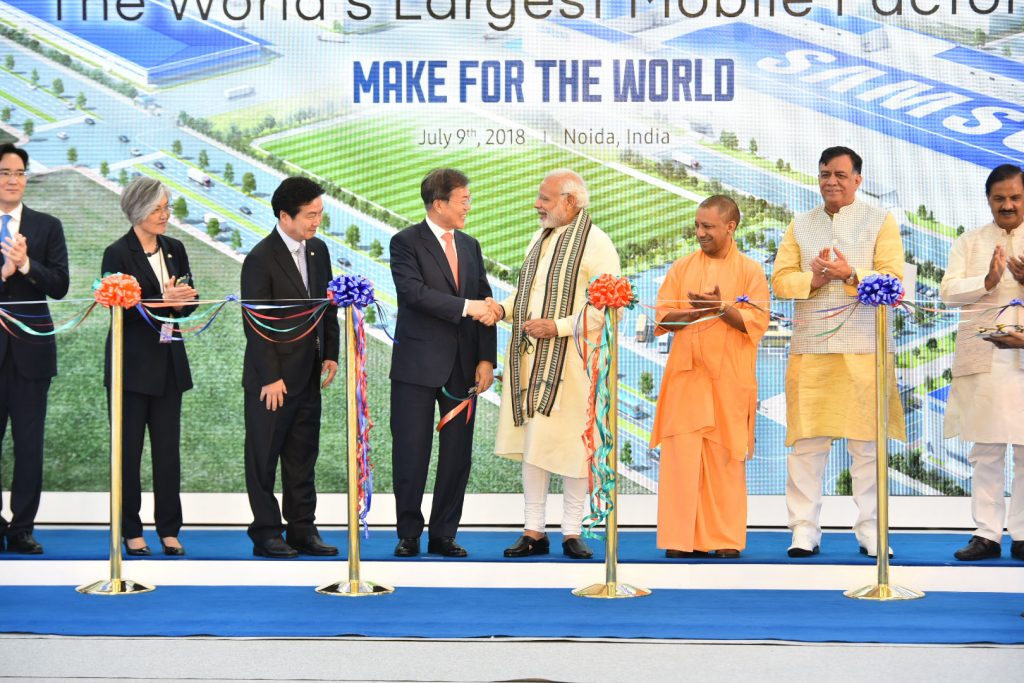
Chief Minister of Uttar Pradesh, most populous state in India, has announced inclusion of Sikh history in the state syllabus. Students of all schools under UP State Board will see the new chapters. The announcement came when Chief Minister Yogi Adityanath (BJP) was observing Sahibzada Diwas.
Why do we Observe Sahibzada Diwas?
Sahibzada Diwas marks the martyrdom of four ‘sahibzada’ (or sons) of Guru Gobind Singh (10th Sikh Guru) and his mother Mata Gujri. In the year 1705, Mughal Emperor Aurangzeb had ordered torturing of youngest sons of Guru Gobind Singh aged 5 and 8. He later executed the little sons by burying them alive into a wall. The reason for this act was that they refused to convert to Islam. Soon after this event Guru Gobind Singh’s mother, Mata Gujri also martyred her life under Aurangzeb’s captivity. The cause of her death is still unclear. Guru Gobind Singh’s other two sons martyred their life in the Battle of Chamkaur Sahib. Thus the 10th Sikh Guru, Guru Gobind Singh had lost his whole family by 27th December. This is an important event in the Sikh history in India and UP Government is finally keen on observing Sahibzada Diwas every year.
Why UP Government is Changing the Syllabus?
Soon after the independence of India in 1947, the school education came under tight grip of far left and communists. Most of the Indian history in the recent past has been written by Romila Thapar and Irfan Habib. They have close ties with left wing ideology and Irfan Habib has delcared himself as Marxist. They wrote history text books by either phasing out sections of Indian history or diluting certain events. The motivation to soft alter the history has been to propagate left-wing/communist ideology. Historian Koenraad Elst once highlighted that Romila Thapar is comfortable neither in Sanskrit nor in Farsi language. The knowledge of these two languages is a must to understand India’s history.
In the recent years, various public opinions have gained momentum to rewrite Indian text books to include more content on Indian rulers and native ideas. Currently, Indian text books mainly teaches about foreign rulers of India such as Mughals and British.
With this announcement of inclusion of Sikh history in history text books, the government is bringing historical facts in mainstream.
27th December as Real Children’s Day
Chief Minister Yogi Adityanath has also reached out to the Education Minister to declare Sahibzada Diwas as Children’s day. He further added that “The history of Sikh gurus will be a part of the syllabus. Apart from this, we should observe December 27 every year as Sahibzada Diwas in all schools. Today is the day to pay gratitude to the sons of the Guru and mother who martyred their lives for the motherland, country and religion.” Yogi Adityanath also said that “No society can move ahead if it forgets history. The Sikh society is known for its hard work. The Sikh gurus sacrificed their lives to defend the Hindu religion. The country will always remember this.”
Yogi Adityanath added that learning about the sacrifices by Sikh Gurus would inspire future generations to dedicate themselves into nation-building. He emphasized that we should make future generations realize that India and Indian culture was safe because of sacrifices of Sikhs.
What Should We Do On Sahibzada Diwas?
Sahibzada Diwas should be an important day for every Indian regardless of their region, culture or religion. On this day, we are in the Holiday mood as it falls right between Christmas and New Year’s eve. However, we should remember that a Guru and his entire family sacrificed their life for the well being of India and the idea of India.
On this day we can fast, do sewa (service), visit a nearby Gurudwara and sleep on the floor at night.

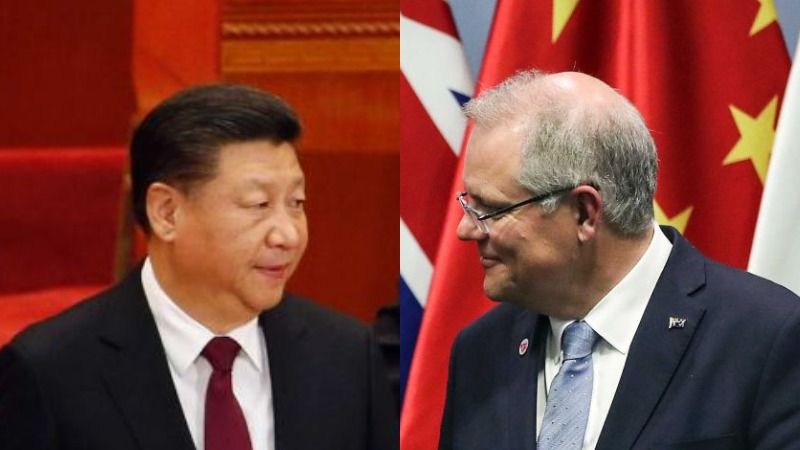
Earlier in November 2020, Communist China slapped Ridiculously high tariffs up to 212.1% on Australian wines. These tariffs were in the response of ongoing trade war between Communist Party of China and Australia. China is the biggest importer of Australian wines making up a whopping 39% of Australia’s total wine export. Australia has already raised concerns at a WTO meeting about China taking measures against its barley, wine, meat, dairy, live seafood, logs, timber, coal and cotton, according to a reuters report.
How did China – Australia trade war begin?
China and Australia shared one of the best times in their relationship after Kevin Rudd from the centre-left Labour party came to the power in Dec 2007. During his leadership Australia decided to pursue appease China policy which included steps such as:
- Chastising Taiwan for its renewed push for independence and reiterating support for a one-China policy in favor of People’s Republic of China. (Source: The Age)
- Signing a A$50 billion deal with PetroChina in 2009 (largest contract ever signed between the two countries) that ensures China a steady supply of LPG fuel until 2029.
- Unilaterally announcing departure from Quadrilateral Security Dialogue to appease China.
Nosediving of China – Australia Relationship
The course of this partnership changed when Julia Gillard from the centre-left Labour Party took over the leadership and initiated closer partnership with United States. This included revival of interest in Joining Quadrilateral Security Dialogue and stationing of US troops near Darwin, Australia.
In 2013, Tony Abbott from centre-right Liberal Party took over the leadership. During his term Australia saw some confusion in its China Policy. His Defence Minister Senator David Johnston told in a statement that Australia is seeking to balance their relationship between China and the United States. It was during his term when Australia and China established a Free Trade Agreement.
However, the relationship between Australia and China took a downturn in 2015 when Malcolm Bligh Turnbull from the centre-right Liberal Party came into power. This is the point in history which has led to current trade war situation between Australia and China.
- Australia became the strongest opponent of China’s territorial claim in South China Sea.
- Banned foreign donations to Australian political parties and activist groups in a move to target Chinese interference in Australian democracy.
- Revived Quadrilateral Security Dialogue with United States (Donald Trump), India (Narendra Modi) and Japan (Shinzo Abe). This was the time when Quadrilateral Security Dialogue saw hope of becoming something bigger as all four countries had centre-right governments who had a clear China Policy.
2019 Onwards: China – Australia Trade War
In 2019, relationship between the two countries further took a dip with Scott Morison from centre-right Liberal party becoming the Prime Minister. During his leadership:
- Australia signed a letter condemning China’s mistreatment of Uyghurs and other minorities.
- Suggested investigating the cause of Covid 19 in April 2020, which resulted into an angry response from China threatening to reduce Tourism and Trade.
- Opposed the Hong Kong National Security Law in June 2020.
- Reiterated its support for ethnic minorities in China and freedom in Hong Kong in October 2020
- Demanded a formal apology from China for posting a fake image of an Australian soldier holding a bloodied knife against the throat of an Afghan child
In conclusion, these continuous attack on China made China so angry that they deliberately leaked a list of 14 points suggesting why China is angry at Australia
China’s attempt at “buying” left wing politicians around the world
Recent trend is suggesting China’s attempt at “buying” influential left-wing politician around the world. In November, 2017 Australia’s Labour Party’s MP Sam Dastyari went against his own party on South China Sea. He later quit his party after he was found of taking financial favours from China.
In 2008, India’s Centre-left party – Indian National Congress signed a Memorandum of Understanding with Communist Party of China. Its contents are still hidden from the Government of India and the people of India.
Recent US Report has shown concern on President Elect Joe Biden not clearing doubts on his China policy.
How Can we Help Australia Post Ridiculous Tariffs on Australian Wines?
In 2020 China has directly or indirectly impacted many of our lives. Some of us have lost our jobs, some of us are taking a reduced salary. In fact, some of us are sitting at home instead of travelling; while some of us have lost our loved ones only because of communist party was incapable of controlling a virus outbreak.
As the entire world is struggling with this virus, Chinese economy continues to be on path of surpassing the US. Therefore, we should pledge to minimize buying Chinese products. It might be impossible to completely boycott Chinese products, but we can at least minimize it.
Install Cultivate Chrome Extension (non sponsored/affiliate link – We are not getting paid to post this). This plugin works on both Google Chrome and the new Microsoft Edge. It helps you understand the origin and seller location of a product on Amazon. It is a great tool to minimize your dependence on Chinese products. If you are lucky, this extension will also suggest some Made in USA alternatives
Buy Australian Wines – Australia desperately needs a new market for its wine and other products. This New Year and Christmas season, we should pledge to celebrate with at least one Australian wine!

BlakeShramster / CC BY-SA
Lately, the Grand Old Party of India has been suffering from severe political lacerations. It is bleeding profusely but it still refuses to recognize and feel the pain of its grisly wounds. The Congress party is obstinately practicing political podsnappery and this is further eviscerating its relevance. Slowly and steadily, its ideological roots are being chipped away. We are witnessing a kind of dilemmatic democratic party, which is strangulating in the ever-shifting tectonic plates of Indian politics. The fresh act of defection by Jyotiraditya Scindia foregrounds the ideologically weak aura which now surrounds the Congress.
In every period of its history, a particular type of ideological encrustation surrounded the Congress and illuminated its charm among the Indian voters. This ideology rooted it firmly in a vast network of ideologies. This ideology, for the most part, has been secular and liberal and acted as a strong bulwark against a xenophobically framed anti-secular strategy. But now, this prodigious party has shrunk to a miniscule group. This cataclysmic contraction has happened primarily due to the elitist imagery to which it was tethered. Congress’s political rivals portrayed it as an inherently elitist group by harping on its corruption scandals like the Satyam Scam, Coal Scam, Chopper Scam, Adarsh Scam and Tatra Truck Scam. All this overemphasis on the financial impurity of the Congress led to the citizens believing that the Congress party is an aristocratic admixture of kleptocracy and bogus secularism.
The political dynasticism of the Congress further solidified this elitist imagery and soon, Congress became the ‘suit, boot ki Sarkar’. The usage of the aforementioned epithet successfully established the presence of the Congress party as a technocratic liberal party, accustomed to high-handed bureaucratic methods of administration. The attribute of a ‘pro-people party’ was snatched away from the Congress and it was represented as a technocratic group, largely unconnected from the material conditions of the citizens.
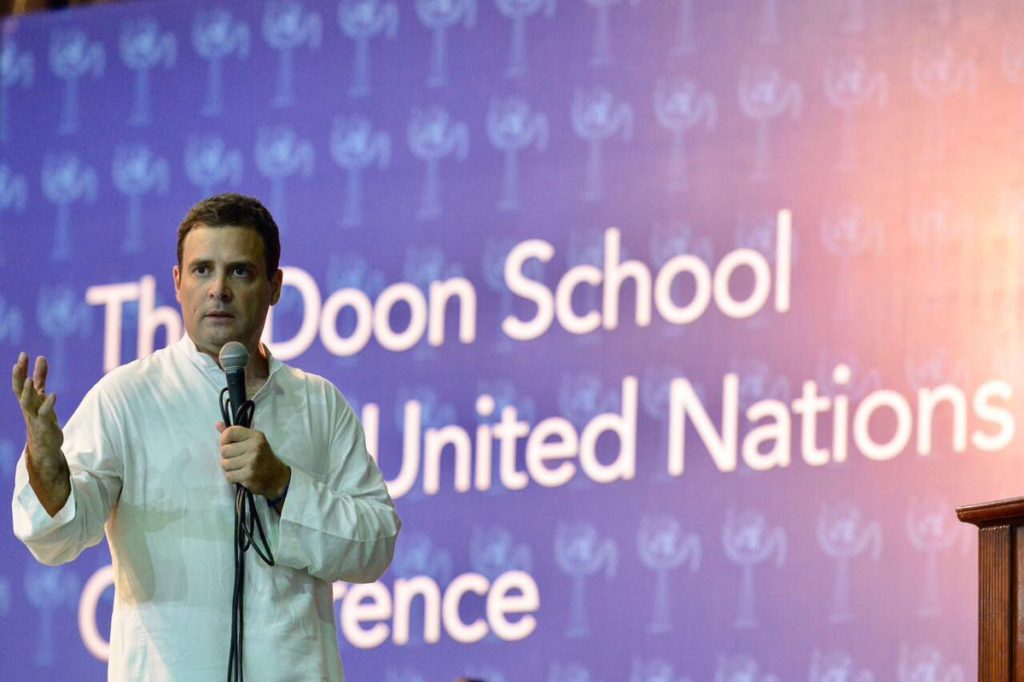
Apart from the political and financial palm-greasing, the Congress has also been disemboweled due to its confounding ideological quagmire. The Grand Old Party is stuck in a regal fort, where it is continuously wavering between a secular strategy and a thinly-veiled contrivance of religious pandering. It has already flip-flopped on its ideological plank by pitching Rahul Gandhi as a religious leader which actually backfired because people at once understood that he had suddenly become a synthetically Hinduized leader.
And now, it is lending its support to the Anti-CAA protests and has all of a sudden, arrived like a knight in shining armor, chaotically shouting secular slogans. Opportunistic acts like these cause severe trust deficit and the party incurs widespread odium for its electoral opportunism. So, due to the Congress’s ideological shilly-shally, its attempt to provide guidance to the Anti-CAA protests is seen as a crude act of politically hijacking the protests. To say succinctly, the Congress has been utterly passive in reacting to some major political events and has not even tried to extend its sinews to drag itself out from the quicksand of financial dissoluteness and ideological vacillation.
Due to all the above mentioned iniquitous inadequacies, Congress is withering and losing its elephantine presence on the electoral platform. This is the most appropriate time for the Congress to recognize its Achilles heel and try to overcome this deficiency. The defection of Jyotiraditya Scindia highlights the fact that now, an ideological string no longer ties any Congress member and the party needs to alter its highly feudal organizational structure which is identical to a form of royal structure, based on monarchical munificence. The Congress party can utilize the following remedial measures to perform the medical operation which is indispensable for it to regain its health.
Constitutional Struggles
It should try assiduously to interconnect itself with the common masses and change its political behavioral pattern by staging what can be called ‘constitutional struggles’. These constitutional struggles will essentially be democratic demonstrations, aiming to recover the lost sheen of the constitution. These protests should be able to blend constitutional patriotism with a Gandhian non-violent idea of struggle. In this way, the Congress party would be successful in politically fructifying its vast receptacles of historical significance and will harmonize its history as a torchbearer of freedom with the present calamitous conditions. One important reason behind the need to make Mahatma Gandhi the vanguard of Congress’s recuperation struggle is the vast space which he occupies in the collective imagination of the Indian citizens. By spotlighting Gandhi, the Congress party can easily initiate a resistance movement whose objective will be to find the Gandhian truths in this age of political prevarications and fabrications.
Change Organizational Configurations
The Congress party needs to change its organizational configurations. The sybaritic structure of dynasticism should be superseded by a bottom-up approach which is decentralized. The present organizational architecture is extremely centralistic and all the members of the Congress party are seen as the supine members of a sycophantic entourage, revolving around the singular nucleus of nobility, which has invariably been the Gandhi family. The senior members of the Congress party such as Ghulam Nabi Azad, Ahmed Patel and Manmohan Singh are depicted as the servile stooges of the Gandhi family who possess an unbreakable fidelity to the dynastic autocracy of the Congress party. The congress leadership is also currently rudderless. During the elections, it played the role of a dabbler. After Indira Gandhi, all the Gandhis (Except Sanjay Gandhi) were reluctant politicians. They were compelled because the Nehru – Gandhi name was associated with the party. All these aspects of party functioning need to be radically changed so that non-Gandhi members are not seen as mere appendages of the supposed undisputed overlord which is the Gandhi family. (3) A coherently unified ideological political programme needs to be built. The lumbering party is in a state of delirium and is unable to properly specify its political stance. It should solidly settle this predicament by choosing to continue with its former political posture as a truly secular and democratic party, committed to constitutional values. If this operation is not undertaken, the Congress will be finally consigned to the political graveyard, where it will die with its shambolic ideological structure.
Test
Industrial masking products improve surface finishing

Recent Books by Boaventura de Sousa Santos: Law, Colonialism, and the Future of Europe

Travel wellness tips for a healthier and more enjoyable journey
