
World
EU, India with ITER prepares for assessing fusion energy


When the world had just stepped on the path of development we started experiencing the shortage of resources specially energy resource like oil, which is very important for the growth of an economy. Considering the ill effects and various accidents in nuclear fission plants, world was looking for a more possible cleaner fuel. And nuclear fusion was the solution.
 ITER (originally the International Thermonuclear Experimental Reactor) is an international tokamak (magnetic confinement fusion) research/engineering project that could help to make the transition from today’s studies of plasma physics to future electricity-producing fusion power plants. It is the body responsible for all the research and development required on processing fusion energy. ITER has seven participating members who are responsible for research and funding of the program. EU, India, Japan, People’s Republic of China, Russia, South Korea, and the United States of America (USA), with China being the last one to join.
In a meeting at Moscow on June 28, 2005 the participating parties agreed on the site for the reactor in Cadarache in Provence-Alpes-Côte-d’Azur, France. The total price of constructing the experiment is expected to be in excess of € 10 billion, As of 17 June 2009. Prior to that, the proposed costs for ITER were € 5 billion for the construction and € 5 billion for maintenance and the research connected with it during its 35 year lifetime.

The EU’s executive body, the Commission, had asked member states to inject fresh funds into the project. The Commission and the European Parliament will have further input before the matter is finally resolved.
Iter itself is holding a special Council meeting on 27-28 July. This will define the latest scope and schedule for the project. Says BBC on 13th July, 2010.
The reactor is designed to produce 500MW of fusion power during pulses of at least 400 seconds.
Nuclear fusion is different than nuclear fission. In Nuclear fission heavy metals like Uranium and Plutonium splits into lighter elements releasing a huge amount of energy. In nuclear fusion lighter elements fuses into a comparatively heavier. Fusion requires high energy to begin but once it is started it generates much more energy for use. One of the best example of fusion reaction in our daily life is SUN.
Fusion has many potential attractions:
- Abundant fuel
- Intrinsically safe
- No production of CO2 or atmospheric pollutants
- “Clean nuclear stove” producing relatively short-lived waste.
Related articles
- EU agrees fusion shortfall funds (news.bbc.co.uk)


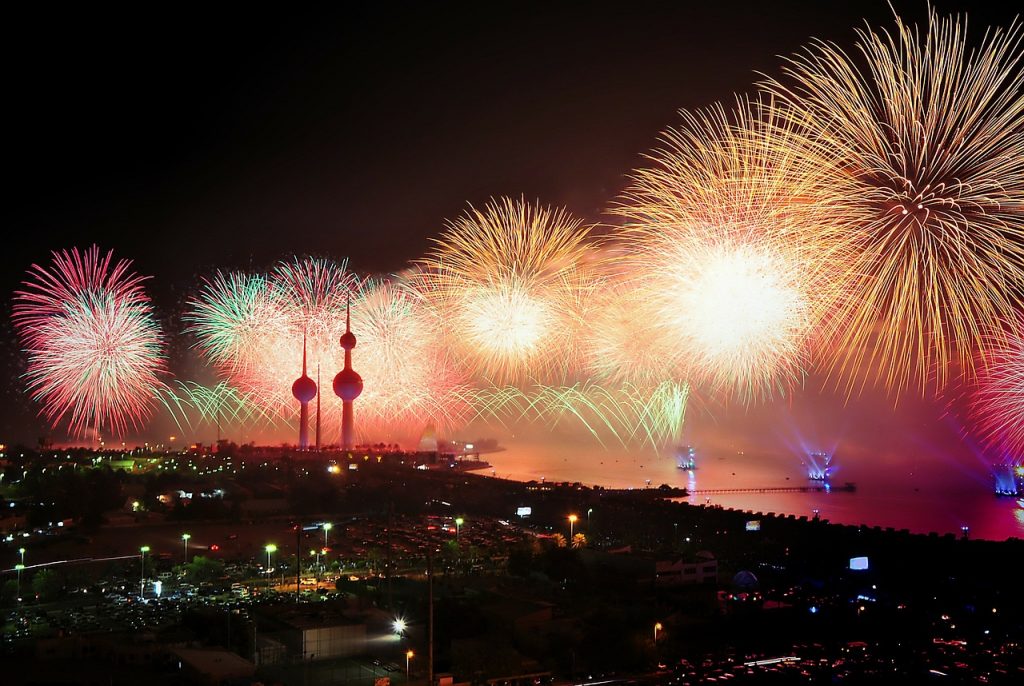
As an oil-rich nation in one of the most oil-rich areas of the world, Kuwait has always been a nation capable of generating a huge amount of money relative to its size. As a result of the money the central government makes from oil sales, it has instituted one of the most comprehensive and generous welfare systems in the world.
The country’s welfare system is built upon the principle that the nation’s wealth should be shared among the people. In addition to oil, there are a few other valuable natural resources that Kuwait profits from. The money that the state generates from all of these commodities more or less guarantees that every citizen is able to live a comfortable life.
What Makes Kuwait Special?
The government of Kuwait subsidises basic services such as telephone lines, water, electricity, etc. Meanwhile, local cooperatives are able to provide food to other citizens at a greatly reduced price. Medical care and education are both free. Kuwait is also one of the few countries that consider a job and a home to be a basic constitutional right.
Middle Class
Because of this generous welfare system, as many as 90% of Kuwaitis are considered to be middle class. The country’s constitution, democratic institutions, and its relatively small population, all allow its citizens to profit from the nation’s oil reserves. As Fahad Al Rajaan, the director general of the Public Institution for Social Security puts it, “if you look at these… elements, it is evident that we are in a much better position than many countries in the world.”
Pensions
Kuwait’s social pension system features three unique characteristics, which set it apart from most. First of all, there is the way that it is financed. Contributors and employers contribute 60% to the total, while the government covers the remaining 40%. Many analysts, including Al-Rajaan, consider this to be the primary reason why the Kuwaiti pension scheme is one of the best in the world.
The second important feature of the Kuwaiti pension scheme is that it is fully funded. This means that the scheme is kept sustainable and solvent. In many other countries, state pension funds are paying out money as fast as they can get it in, creating uncertainty for the future.
Finally, there is the fact that the Kuwaiti pension fund pays out very generously. Once citizens reach the age of 30, the coverage increases to 95% of salary. This is much higher than the rates available in many other countries. Kuwait also has a generous retirement age of 50.
The Kuwaiti welfare system is a prime example of the potential power of redistribution of wealth. The Kuwaiti welfare system is based on a simple principle, that the fruits and assets of a nation should be shared equally among its citizens.
Many people argue against more generous welfare systems on the basis that they represent a drain on resources, to benefit the few at the cost of the many. The Kuwaiti system stands as evidence that it is possible to institute a very generous welfare program, while still encouraging economic growth and prosperity.

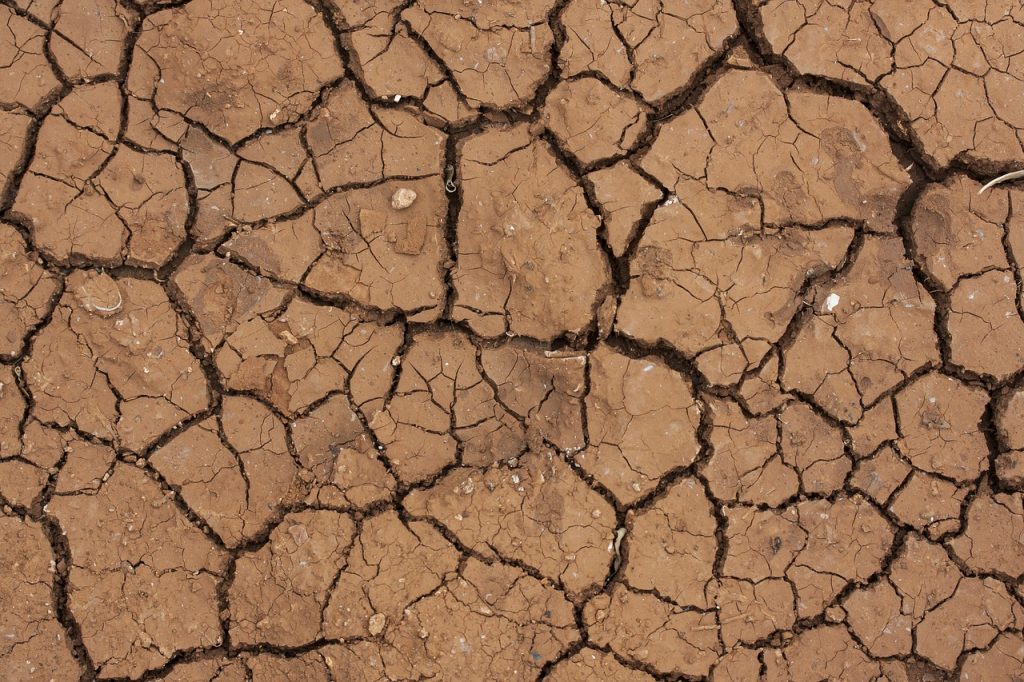
The unpreparedness of the human race has slowly but steadily come to the surface over the previous decade when it comes to ensuring our own survival and more importantly, that of the following generations. Before we even attempt to realize the impacts of climate change that are thrown into the faces of some community who then serve as the unfortunate examples of what’s going to happen, another repercussion pops up into the frame at the cost of another unsuspecting community, a country, or even a city. The city of Cape Town in South Africa serves as the most recent of those examples, and the crisis in the city bodes an ultimatum like never before to other thriving cities on the planet: mend your ways or follow suit.
“Day Zero”: as dire as it sounds
The event currently underway in Cape Town could be aptly described as probably its worst drought in nearly a century, one that has seen its people and authorities struggle to obtain water in the wake of depleting natural sources in order to sustain even their daily hygiene rituals. The city is quickly closing in on what has been dubbed as “Day Zero“: the day when the city will run out of its water. When that happens, it would be the first occurrence of such an event for a major global city. “Day Zero”, originally estimated to occur on April 22, was more recently moved up to April 12 with Cape Town’s 4 million strong population finding it difficult to adjust to the demands of reduced consumption.
A point of no return, is it?
The authorities, including city mayor Patricia de Lille have urged citizens to restrict their usage to 50 litres per person a day with effect from February 1 to accommodate the shortage and help prevent the situation take a turn for the worse. However, most citizens have been ignorant of these warnings in the past month and have irresponsibly consumed more than 87 litres per day, the restricted amount in place till the end of January. “It is quite unbelievable that a majority of people do not seem to care and are sending all of us headlong towards Day Zero” she said, adding, “We have reached a point of no return.”
Despite the comments of the mayor, it can be safely mentioned that many people of the city are realizing the weight of the crisis, and have begun to get creative with the different ways in which they can collect and reuse water in order to restrict their consumption to the stipulated limit and escape hefty fines. Long queues to purchase bottled water for household consumption in supermarkets has also become a common sight over the weeks.
Former mayor Helen Zille, who will also direct the disaster management response on the arrival of Day Zero has sounded hopeful, going so far as to say that Day Zero can be avoided should everyone realize the implications and make a concerted effort towards conserving water. “That is not difficult if we all put our minds to it in our homes and in our workplaces,” she said of the situation. Ms. Zille, along with other officials have provided tips to the people for saving water and getting the maximum use out of the water that they use: turning off the taps of toilet cisterns and using the grey water from washing in the toilets instead and showering less often. “No one should be showering more than twice a week at this stage. You need to save water as if your life depends on it because it does” were her words.
Not a crisis out of thin air
The crisis that the people in Cape Town are facing is not sudden by any standards. In fact, first warnings against the occurring were given out in the 1990s which were largely ignored. One main factor identified behind the crisis and its scale is the city’s population of about 4 million individuals, which has seen a high rate of growth over the years and is still growing strongly. Coupled with the drought that the population is currently facing, the strain on the resources for water has increased. South Africa hasn’t received sufficient rainfall for three years now. The drought in turn arises from climate change and the El Nino effect. There are six dams that supply water to the city and are currently 25.8 per cent full. The figure stood at 85% in 2014 and 38.4% a year ago.
What the dawn of Day Zero would mean for the people of Cape Town
On the dawn of Day Zero, Capetonians would be allowed just 25 litres of water per person a day, or roughly 7 gallons. To put that into perspective, you can take the average amount of water that Americans use: 80 to 100 gallons. A single flush of a toilet amounts to 2 gallons, and a 90 second shower could use up 4 gallons. To keep the restrictions in check, most taps in the city would be switched off and residents will have to get their daily share of water from any one of 200 allocated points in the city. Plans are also being made to store emergency water in military installations. The sooner the city head towards Day Zero, the sooner Capetonians will need to prepare for a new lifestyle, one that is significantly astray from that of entitlement that we all are living in right now. The crisis in Cape Town is a crystal clear warning to us, and one that will likely be not be given the consideration it is due.

In theory, all 195 states adhere to the Charter of the United Nations and therefore pledge “to establish conditions under which justice and respect for the obligations arising from treaties and other sources of international law can be maintained”. In other words, to play the game and adhere to basic governmental principles. That’s in theory: in practice, a handful of states in the world behave like mafias, and get away with it.
President George W. Bush first used the terms “failed states” or “rogue states”, during his office. Rogue states seem more adapted because, if they are failed states in the sense that they do not carry out their mission, they are not failed for everyone. Afghanistan is, still today, one of the most prominent examples of how to get personally rich by pretending to represent people. In the wake of the NATO intervention in Afghanistan, billions of dollars were poured into the country in reconstruction efforts, based on the belief that if the population was schooled and busy at work, they would be less likely to join rebel ranks. The idea was good, but most of the massive funds were sidetracked to line officials’ pockets and Afghanistan is pretty much in the same shape as it was before the program, if not worse. Business Insider covered the subject (1): “All districts receive central government budget to cover salaries of front-line forces,” reporter Jessica Purkiss wrote for the Bureau. “In many areas in Afghanistan, some of this budget disappears and the actual number of officers tasked with holding back the Taliban is much lower than the number actually allotted.”
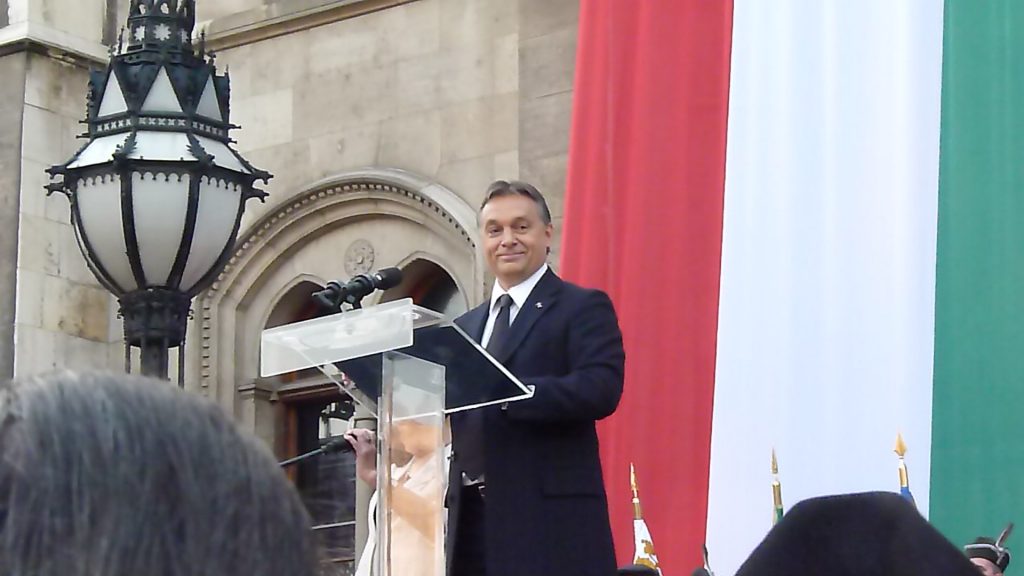
And such rogue states also exist close to the Western sphere of Europe and the US. Almost every single State in Central and South America is at the warning level on the Fragile State Index (2) (the term was brushed up to sound less definitively damning than President Bush’s wording). Hungary was bashed this year, along with the rest of EU low-performers, for dropping sharply in the EU’s good governance ranking, as reported by Nicolaj Nielsen, for the EU observer (3): “Bulgaria scored the worst among EU states with 41, followed by Greece (44), Italy (47), Romania (48), Hungary (48), and Croatia (49). Dolan faulted the crackdown on civil society and other independent institutions in Croatia and Hungary for their worsening performance. Both governments were also embroiled in scandals last year. In one case, Hungary’s government allegedly funneled money from the Central Bank to friends and family.” Prime Minister Viktor Orbán learned from the report (4) that “Hungary loses 200 billion forints every year due to the corruption that exists in public procurement cases.”
Not to forget that States are not all mutually recognized and accepted, some of them are self-proclaimed. While some do indeed strive to carry out their stated mission and serve the people they claim to represent, some other are merely mafia groups with a political cover, which deal in various traffics and racketeering. Bordering Morocco, Algeria and Mauritania, lies Western Sahara, where a group named the Polisario Front announced to the world that it was the shield of the Sahrawi people, who originate from the arid strip of land, with the stated intent of creating a sovereign state. But that must be put into perspective with the endless list of allegations and accusations carried against it, regarding the Polisario’s management of refugee camps in Algeria for example. The self-proclaimed government of the Sahrawi – namely the SADR (Sahrawi Arab Democratic Republic) – is known for keeping the refugees captive in the camps, or keeping family members as hostage to guarantee men’s returns, maintaining a general state of violence and lawlessness within the compound. In addition, the European Anti-Fraud Office (OLAF) has serious doubts (5) as to what becomes of the humanitarian aid it sends. It suspects not only the food to be sidetracked and sold on the black market, but also to be requested in excessive numbers – the Polisario front claims it holds up to 200 000 refugees but has systematically refused census, leading humanitarian donors to believe the figures are doubtful.
Can this be avoided? Hardly, at the general level. Pablo Escobar coined the phrase which underlies the entire system : Plata o plomo (silver or lead). Officials could be paid off to keep silent and play along, or be shot. Therefore, it is in the nature of corruption systems to maintain themselves because, should a “pure” official arise, he will be removed and replaced by a more complacent one.
Mafia states use the cover of darkness or, better still, a politically activist stance. The Colombian FARCs – Polisario’s allies, incidentally… – and the Medellin Cartel, run by Pablo Escobar, had an intense PR activity with many “social and humanitarian” poses, to help improve their public image and stymie political push-backs. The Polisario Front has moved much of its assaults to the judicial level, in a new form of “civilized” piracy, including with the surprise attempt to seize a Moroccan shipload earlier this year in South Africa. “The conclusion of this case will actually tell us whether it is now conceivable, on the judiciary level, that international shipping industry – which carries 90% of global trade – become hostage to some form of unprecedented and increasingly vicious political piracy,” wrote Philippe Delebecque (6), a French judge specializing in maritime affairs.
Mafia states are here to stay, because the mafia creates the state, and not the other way around. Once the mafia has developed its tentacles and political power enough, it will make kings and topple uncooperative administrators. Other states in the world are fully aware of this fact, and that if they bust a mafia-state, another will replace it within weeks. So, in the best cases, neighboring countries let it be; in the worst cases, they get involved in the graft.
1) http://uk.businessinsider.com/afghan-national-security-forces-us-assistance-70-billion-2017-9
2) http://fundforpeace.org/fsi/
3) https://euobserver.com/political/136664
4) http://hungarianspectrum.org/2017/01/26/hungary-has-been-steadily-becoming-more-corrupt/
5) http://www.eubulletin.com/4018-exclusive-olaf-report-reveals-diversions-of-eu-aids-to-western-sahara.html
6)https://seapiracy.einnews.com/article/406654813/_j2VsuC3itgcmo3C?lcf=YCp5Ip9ztVBQmLVnDO55vXzEICMe6RFJuBE3DVQzur8%3D
Test
Industrial masking products improve surface finishing

Recent Books by Boaventura de Sousa Santos: Law, Colonialism, and the Future of Europe
Travel wellness tips for a healthier and more enjoyable journey
