
India
India Expanding Its Strategic Presence in Other Countries

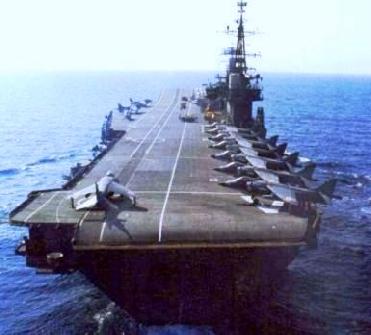 India and China, since they are being compared with each other have become more aggressive in the competition of spreading their influence in the region. While China projects itself as a world power, India continues to keep its limits within the subcontinent region. Although the world requires India to take leading role in the geopolitics diplomacy, India’s response so far has been indifferent. India kept itself away from saying any word on the issue of Syria and Libya.
India and China play a complex diplomatic politics. Friends at global levels, but rivals in the regional level. India and China trade is worth billions of US dollars. Recently on March 29th, 2012 Indian and Chinese leaders met during BRIC summit. The leaders stressed on linking economies along with other BRIC nations, as in trading in local currencies as well as linking stock exchanges of the member countries. The leaders also stressed on setting up of an international bank on par with Asian Development Bank, IMF and World Bank. It would fund various development projects in member countries and other emerging economies and may act as a relief provider for first time buyer mortgage in case of real financial crisis and disaster. The goal of the bank will also include lending, in the long term, if there comes a global financial crises such as the Eurozone crisis and issuing convertible debt, which could be bought by the central banks of all the member nations. Hence it will be acting as a vessel for risk-sharing.
Things that irritates China is India’s sweet relations with exiled Tibetan government and Taiwan Island, which China claims as its own territory. India and China has been involved in full fledged war in 1962, after that both the countries tried to keep their differences aside and focus on the economy, although border disputes occurred many times.
India’s main concern at the moment is checking its all time arc rival Pakistan and securing its influence on the Indian Ocean region.
So far India had been taking on the invasion by the neighbouring countries on its land, but recently it has realized that its presence at the other strategic locations on the map is also necessary to showcase its military readiness, flexibility and superiority.
On Thursday, July 5th, the visiting Mauritius foreign affairs and trade minister Arvin Boolell to India made an unexpected offer of giving two Mauritius sun-drenched islands to India as part of a trade and investment deal.
He said that India can use those islands to its advantage, it could be either a military base or India can develop them as a tourist spot. However soon the Mauritian High Commission in a press release denied that such an offer was ever made.
This is not the first time when Mauritius presented such an offer. The island nation had offered India the same two of islands North and South Agalega Islands nearly 1,100KM north of the Mauritius main Island in 2006. But the country had to take back the offer due to large disagreement in the political system of the country.
If the political pressure eases down in Mauritius and Indian government accepts the offer, then situated close to an important sea lane of communication in the southern Indian Ocean, these islands can be effectively used by the Indian Navy and Air Force. North Agalega island already has an airfield and can be repaired to make it into an advanced airbase. The island also caries a huge potential of becoming a tourist destination and agricultural land, although the land area is officially mere 70 sq km and it could be smaller as suggested by the satellite images.
India shares good strategic relations with Mauritius and its Naval and Air Force personnel work closely with the Mauritian Police (Army, the country doesn’t have its own standing army), helping them in various tasks like checking illegal fishing in the maritime zones of Mauritius as well as checking pirate activities.
The deal is still on the paper and may not even exist as denied by the Mauritian High Commission, today the only Indian presence in the foreign country is Tajikistan where India maintains two air bases Farkhor and Ayni.
Farkhor is official Indian air force base. Situated near the border of Afghanistan, the airbase is nearly only 250KM away from Pakistan. Russia has a great influence in Tajikistan and doesn’t allow any other country to form a base their. However, this base was secured by India with the assistance from Russia. in 2003, at the cost of $10 million, India repaired the base which was lying unused since 1980. The base hosts a squadron of Mig 29.
Ayni Airbase is situated much away near the border of Uzbekistan. Both India, Tajikistan and Russia deny the reports that India has been using this base for its Air Force. In January 2011, Tajik Foreign Minister, Hamrohan Zarifi, officially launched negotiations with Russia to discuss possible deployment of Russian military at Ayni. It is confusing that India has invested on this air base seven times more than what it invested in Farkhor, still there are denial from all the sides about its use as possible Indian Air Force base. Tajikistan has confirmed that India extended the length of the runway to 3,200 meters and installed state-of-the-art navigational and air defense equipment. India also maintains and operates a military hospital at the base.
 |
| Farkhor and Ayni Air Base |
Both the Bases gives India an advantage over China and Pakistan. Indian aircrafts stationed there can reach China and Pakistan within minutes from the backside, at the time when the enemy would be expecting Indian aircrafts to come from the conventional direction.
Located in the east, India has its own base in the Andaman and Nicobar islands, these islands joined the Indian Union in 1956 once the Royal Air Force handed the Car Nicobar airbase, once India secured the large island group, it not only had expanded India’s Exclusive Economy Zone, but also brought Indian forces to the mouth of strategic Straight of Malacca.
Situated at the vital sea lines of communication between the Middle East and East Asia, the Maldives will be the nucleus of future security order in the Indian Ocean. M P Anil Kumar, analyst and former Indian Air Force Pilot says that India should offer Maldives statehood under its union. Maldives came into everybody’s attention as it is the nation which has been experiencing the worst form of global warming. Maldives’s height above the sea level is very low, that makes it very vulnerable to floods. Due to rise in sea level because of global warming, Maldives islands are feared to be submerged first. Considering the possibility that Maldivians will have to migrate before that happens, he said that their most preferred choice will be India, because of many similarities and closeness.
“Given what could happen by the year 2100, it is imperative for India to act in good faith, and also with an eye on our national interest. India should offer Maldives statehood within our Union. This move, apart from letting the Maldivians resettle on the mainland with minimum legal fuss will help to extend India’s EEZ. A win-win prospect for both parties,” He added “Even if they decline, India can ask for the belt of waters surrounding the archipelago to be converted into mare nostrum. Yep, the EEZ pitch is a decoy.”
The possibility of Maldives joining Indian Union is very less, moreover China already has its footsteps on the island nation ans is trying its best to start the project of developing its base in Marao island of Maldives quickly. India has though tried to setup its naval and airbase in the island nation. It was in August 2009 when A.K. Anthony, visited the islands to discuss the deployment of surveillance aircraft and ships


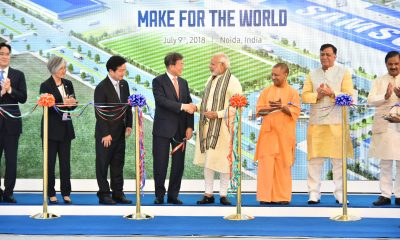








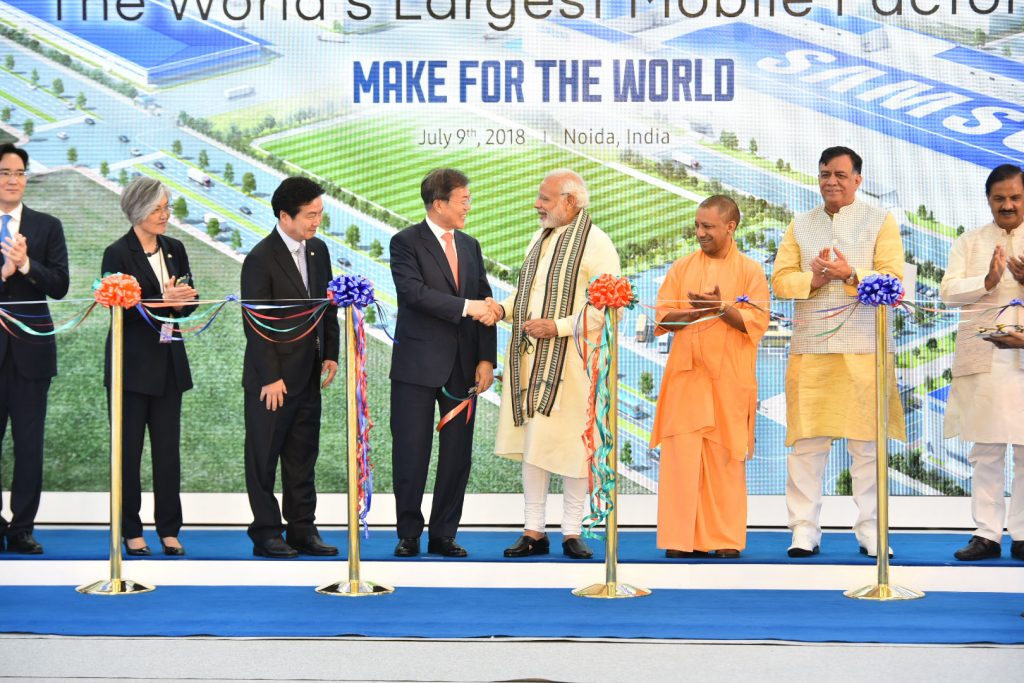
Chief Minister of Uttar Pradesh, most populous state in India, has announced inclusion of Sikh history in the state syllabus. Students of all schools under UP State Board will see the new chapters. The announcement came when Chief Minister Yogi Adityanath (BJP) was observing Sahibzada Diwas.
Why do we Observe Sahibzada Diwas?
Sahibzada Diwas marks the martyrdom of four ‘sahibzada’ (or sons) of Guru Gobind Singh (10th Sikh Guru) and his mother Mata Gujri. In the year 1705, Mughal Emperor Aurangzeb had ordered torturing of youngest sons of Guru Gobind Singh aged 5 and 8. He later executed the little sons by burying them alive into a wall. The reason for this act was that they refused to convert to Islam. Soon after this event Guru Gobind Singh’s mother, Mata Gujri also martyred her life under Aurangzeb’s captivity. The cause of her death is still unclear. Guru Gobind Singh’s other two sons martyred their life in the Battle of Chamkaur Sahib. Thus the 10th Sikh Guru, Guru Gobind Singh had lost his whole family by 27th December. This is an important event in the Sikh history in India and UP Government is finally keen on observing Sahibzada Diwas every year.
Why UP Government is Changing the Syllabus?
Soon after the independence of India in 1947, the school education came under tight grip of far left and communists. Most of the Indian history in the recent past has been written by Romila Thapar and Irfan Habib. They have close ties with left wing ideology and Irfan Habib has delcared himself as Marxist. They wrote history text books by either phasing out sections of Indian history or diluting certain events. The motivation to soft alter the history has been to propagate left-wing/communist ideology. Historian Koenraad Elst once highlighted that Romila Thapar is comfortable neither in Sanskrit nor in Farsi language. The knowledge of these two languages is a must to understand India’s history.
In the recent years, various public opinions have gained momentum to rewrite Indian text books to include more content on Indian rulers and native ideas. Currently, Indian text books mainly teaches about foreign rulers of India such as Mughals and British.
With this announcement of inclusion of Sikh history in history text books, the government is bringing historical facts in mainstream.
27th December as Real Children’s Day
Chief Minister Yogi Adityanath has also reached out to the Education Minister to declare Sahibzada Diwas as Children’s day. He further added that “The history of Sikh gurus will be a part of the syllabus. Apart from this, we should observe December 27 every year as Sahibzada Diwas in all schools. Today is the day to pay gratitude to the sons of the Guru and mother who martyred their lives for the motherland, country and religion.” Yogi Adityanath also said that “No society can move ahead if it forgets history. The Sikh society is known for its hard work. The Sikh gurus sacrificed their lives to defend the Hindu religion. The country will always remember this.”
Yogi Adityanath added that learning about the sacrifices by Sikh Gurus would inspire future generations to dedicate themselves into nation-building. He emphasized that we should make future generations realize that India and Indian culture was safe because of sacrifices of Sikhs.
What Should We Do On Sahibzada Diwas?
Sahibzada Diwas should be an important day for every Indian regardless of their region, culture or religion. On this day, we are in the Holiday mood as it falls right between Christmas and New Year’s eve. However, we should remember that a Guru and his entire family sacrificed their life for the well being of India and the idea of India.
On this day we can fast, do sewa (service), visit a nearby Gurudwara and sleep on the floor at night.

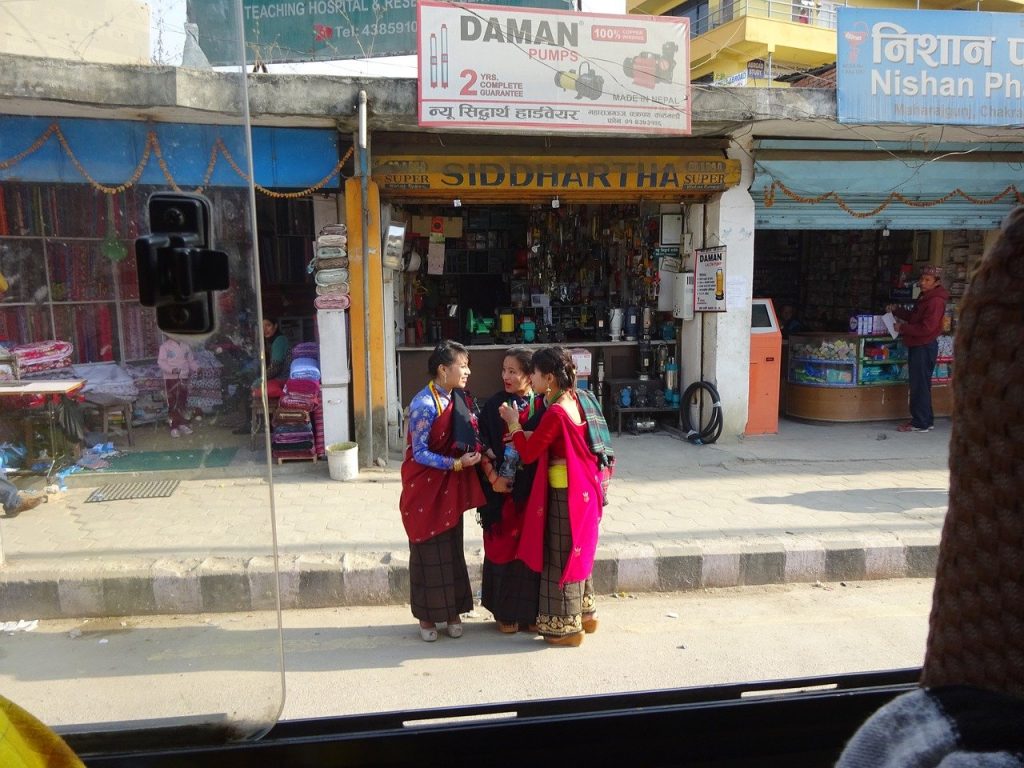
Nepal abolished the Constitutional Monarchy in May 2008 and declared itself as a Federal Democratic Republic. There was a new hope in Nepal as it was becoming world’s newest democracy even though it had dissolved the Hindu Rashtra. However, the democracy in Nepal immediately got into the tight grips of leftists and communists backed by China. It has been almost 12 years since monarchy was abolished in Nepal. Interestingly, the Himalayan country has already seen 11 Prime Ministers in this period. Thus, leaving the Nepalese people still yearning for good and stable governance.
Re-establish Hindu Rashtra
As the political instability is growing in Nepal, people are demonstrating concerns about the future of the country. In fact, Nepalese citizens are unhappy with frequent interference by China and India influencing its unstable communist regime. More voices are now growing in support of reinstating the Monarchy and declaring Nepal as world’s only Hindu Rashtra (which by default offers full religious freedom to other religious minorities as per Hindutva concept of Sarva Dharma Sama Bhava – all paths lead to one).
Former Deputy Prime Minister of Nepal, Kamal Thapa said that if political parties do not recognize the seriousness of reinstating the monarchy, then the country will head for a period of darkness. “Recently, we’ve had high-ranking officials from India and China come to Nepal to try and solve problems within the ruling party,” he said. “We cannot let others dictate what we want to do.”
Communist Party All Set to Suppress Protests, By Force
Kamal Thapa has firmly demanded an all party meet to discuss reinstating of monarchy. Throughout the month of December, 2020 Nepal has seen anti communism protests across the country in support of reinstating the monarchy and Hindu Rashtra. Most importantly, the demand has become a nationwide mass people’s movement. So much so that the communist regime had to send a directive to 77 districts in 7 provinces. The directive suggests suppressing the protests by force. Nevertheless, Rashtriya Prajatantra Party and other royalist groups have ignored this threat from the communist regime. Protester groups have pledged to strengthen the protest in the coming weeks.
Nepal: Demonstration held in capital Kathmandu, demanding restoration of monarchy in the country. pic.twitter.com/TFjmKu9U9Z
— ANI (@ANI) December 5, 2020
Role of China – Hope for Communism in Nepal
China’s ambassador to Nepal is known to have very close relationship with Nepalese Communist regime. In fact, She has been super effective in tilting Nepal’s posture towards its ideological partner, China. One of her greatest achievements in 2020 was artificially manufacturing a border conflict between Nepal and India. Consequently, souring relations between the two Hindu majority nations. In addition, she managed to silence Nepal’s communist government after China took one of Nepal’s border villages under its control. However, recent political turmoil in Nepal and a renewed demand for reinstating of Hindu Monarchy is showing that the situation is now out of Chinese hands
Role of India
Year 2020, was not a good year for India and Nepal relations. India was busy in controlling domestic Covid cases. On the other hand, China had launched an invasive campaign into Indian territory. In addition, India is always busy with Pakistan on its western borders. However, the surprise came to India when China was almost successful in creating a new border tension between India and Nepal.
Those who do not know about Indian government should note that the current ruling party in India finds itself ideologically opposite to communism. This further creates differences between the two countries.
Communist party in Nepal has blamed India for supporting the ongoing anti communism protests in Nepal. However, former advisor to Nepal’s PM has suggested there is no proof that India is fueling pro Monarchy, anti communism demand in Nepal.
Nevertheless, There are certain influencers in India who have, in their personal capacity, expressed support for reinstating the Hindu monarchy. Yogi Adityanath, who is the Chief Minister of an Indian state bordering Nepal, said in 2015 that Nepal should declare itself a Hindu Monarchy. Readers should note that in 2015 Yogi Adityanath was not the Chief Minister yet. However, today he is not only popular in south of Nepal, his popularity is growing in Nepal as well.
Will The World See the first Hindu Rashtra?
It is difficult to answer this question at this moment. However, Nepalese communist government could not resolve the political instability and in December 2020 Nepalese government dissolved the parliament. Nepal will see next elections in April – May 2021. Hopefully, the world will see Nepal’s 12th Prime Minister in 13 years or may be a Hindu King? Royalists and protester groups have expressed confidence in winning next elections. We have our eyes on Nepal for updates.

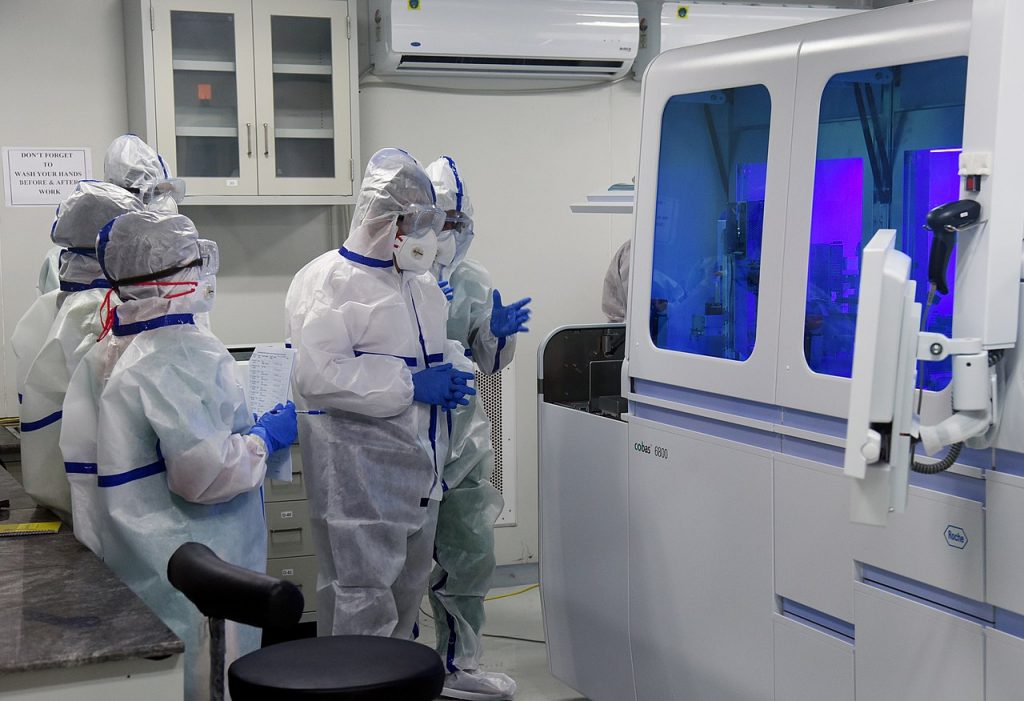
Photo by Press Information Bureau, Government of India
The world changed exponentially since the pandemic broke out. We changed too. Emotions are running high. We have learnt to take one day at a time and have stopped expecting changes to happen overnight.
“COVID19 is menacing the whole of humanity – and so the whole of humanity must fight back”
A clarion call from United Nations Secretary-General António Guterres is a call to unity and solidarity. Already plagued by natural/manmade disasters and wars, many countries seem to bite the dust for want of resources in the fight against the virus. Warning each other against complacency is appreciable but never a blame game to cover up a dysfunctional response. Not all update themselves on the governments, new economic policies and R&D on Covid vaccine. Many we come across seem to be making wise individual choices. No matter how badly the tiers of government fail us, there will always be thousands of people working to make things better. Besides, finding reasons and faults on policies for the spread doesn’t help. A virulent strain of flu had managed to spread within a few months to the remotest corners of the world infecting half a billion people – more than a quarter of the human species in 1918 long before the current age of globalization.
Separating, alienating and forswearing the endless moments of contact that knit society together thrust us into frightening new realities. The good is still there. Social distancing is nothing but taking a step back to literally give breathing space to others. Going by news & views, we understand that amid concerns of rising numbers of positive cases in frustrating circumstances, acts of kindness and solidarity are burgeoning. Yes, it’s been extremely sad and sobering to watch this all unfold, but watching people share resources and supporting one another in every conceivable way has made us feel more connected to our local communities. Whether singing a song together out on balconies, getting groceries for the elderly or calling a friend to alleviate anxiety and fear, each one I know play a part and take comfort in a sense of togetherness. We are steadily aware of our limitations yet don’t hesitate to free our wells of compassion. Do we think twice and thrice to make an online contribution to save the lives of people we don’t know and will never know!
Sadly, it has taken an invisible virus to help us belive once again that we are strongest only when we have the welfare of others in our mind. Halfway through quarantine and self-isolation a phone call, a kind word, an opportunity to reach out, a breeze, bird calls, one good news and loss of a loved one, we are hit with the necessary humility and awe we ought to feel and appreciate just how beautiful our world is and precious life is.
Post pandemic recovery will be better and bigger if life goes on with this beautiful idea, of humility, inwardness – as an ethical relationship, for the sake of others. For better or for worse, we have learnt that one can’t be an island unto himself. Lives are intertwined and are bound together. We, humans produce more rubbish than any other species. The growth in the human population is part of the explanation, but cannot account for all of the extra rubbish, a result of haste and greed both which almost skinned humans of humanity.
Unity among countries must ensure that all countries are equipped to trace, isolate and treat people infected by COVID-19. Only a global effort can avoid the collapse of any country’s medical system. Sanctions that affect health care should never be imposed. Development in one part of the world should not rob another country of it’s resources. Humanity gains the upper hand over invisible predators through the sharing of reliable scientific information, global solidarity, vaccinations, antibiotics, improved hygiene and a much better medical infrastructure. Today,it doesn’t take too much to figure out that global sharing and caring is the best defense. The Jing Si aphorism, “Good actions require everyone’s cooperation. So let’s not cling to personal biases” holds good for all times.
Stories of good samaritans are aplenty. To know humanity is still alive and kicking and is at it’s best when united assures us that we’ll come out of this “abnormal” time with a new normal. In their own unique ways, humans respond to protect life and health and ensure respect for fellow beings. ‘single-nucleotide polymorphisms’ are no joke. From handing over meals, survial kits, medicines, home made masks to calling on an old couple across the street, everything is humanity in action and it is the power of this humanity – humane behaviour towards other humans – that we seek to celebrate, improve and increase, especially during crucial times. Remember “A person with a generous heart and compassion for all beings leads the most blessed life”.
With thousands of migrant workers taking it on their chin, vehicles filled with food and ration along highways reach the needy and stranded and canteens serve free food. Rays of sunshine! We see through hypocrisy and deceptions, hear excuses for inefficiency, inadequacy and inflexibility and within the tumult and uncertainty we are doing much, much better in life than we thought we can. Quietly. Kindly. Gently. Being able to spare a part of us to help someone live is worth being thankful for. ” Giving with an expectation for return brings misery”. May we give generously, but don’t guilt ourselves if we can’t. If we have nothing left to spare, let’s go slow and kind.
The world is being taught a lesson, the harder way. This lesson is not about rich and powerful versus poor and powerless but about leadership that treasure the common wealth and common good, above private greed and profit and above protecting the privileges of a handful elites.
None of us are actually going anywhere. Might as well stay. The conclusion we draw from this crisis is that all humans matter equally, that we need to give a hand, raise one another, flourish or perish together- no matter what our limitations are, we’re capable of a great deal. This virus backlash is nothing short of a fleeting lesson to all leaders about how sane, humane societies should function all the time. Those who regard themselves as wonderfully favored of leadership, power and pelf are called to do great things. Anything that constantly arise to cause conflicts or disunion must be questioned, criticized, denounced and judged.
Be it a forced contemplation of our mortality or a sudden urge of self denial or an awareness of the passage of time and life, this screeching halt is proof that humans are designed to be more productive when connected, even in isolation. So, not all hope is lost. The time has come when we must know for ourselves why we believe in humanity as we do.
“Do something good for somebody today; the people who are trying to make the world worst aren’t taking days off.”
Gestures to honor humanity are varied, aplenty. A flypast in India is a cruel joke on the already tumbling down economy and on the selfless humanitarians who spare nothing to reach out. We can only wish the trail of showered petals, if showered will guide the departing victims of COVID19. Flying past/over ground realities is a highly irresponsible act of governments. Also, a misuse and mismanagement of meagre resources.
Was it a premonition that urged saint Thiruvalluvar, celebrated Tamil poet and philosopher to get on with kural 578 which when translated into English goes as
” The world is theirs (Kings) who are able to show kindness, without injury to their affairs, (administration of Justice).
Industrial masking products improve surface finishing

Recent Books by Boaventura de Sousa Santos: Law, Colonialism, and the Future of Europe

Travel wellness tips for a healthier and more enjoyable journey

Travelling from San Antonio to Guadalajara
