
China
US Report: China gifted nuclear bomb and Pakistan Acquired the technology


A new US Congressional report has challenged the Pakistani story that India’s first nuclear test in 1974 was the trigger for its nuclear weapons quest. The Congressional Research Service’s May 15 report to US lawmaker said that Pakistan’s nuclear energy program dates back to the 1950s “but it was the loss of East Pakistan (now Bangladesh) in a bloody war with India that probably triggered a political decision in January 1972 (just one month later) to begin a secret nuclear weapons program.” It further added that Pakistan’s argument was falsely represented to the international community, that it was forced to take the nuclear weapons path because it was provoked by India’s first nuclear test in 1974.
One such expert, White House insider Bruce Riedel, who recently co-authored the Obama administration’s Af-Pak policy, offered the following sequence in a recent op-ed, broadly concurring with the CRS report:
“The origins of the Pakistani nuclear program lies in the deep national humiliation of the 1971 war with India that led to the partition of the country, the independence of Bangladesh and the destruction of the dream of a single Muslim state for all of south Asia’s Muslim population.” The military dictator at the time, Yahya Khan, presided over the loss of half the nation, the surrender of 90,000 Pakistani soldiers in Dacca. The Pakistani establishment determined it must develop a nuclear weapon to counter India’s conventional superiority.
The new prime minister of those times, Zulfikar Ali Bhutto, secretly convened the country’s top 50 scientists in January 1972 and challenged them to build a bomb. He famously said that Pakistanis would sacrifice everything and “eat grass” to get a nuclear deterrent. The 1974 Indian nuclear test helped Pakistan to tell the world that this is the cause of their nuclear bomb. Starting in 1972, Pakistan came up with its own nuclear bomb in 1998 with the slight help of China, just a few days after India’s second nuclear test
The Report further added, “Mr. Bhutto received an unsolicited letter from a Pakistani scientist who had studied in Louvain, Belgium, Abdul Qadeer Khan, offering to help by illegally acquiring sensitive centrifuge technology from his new employers at a nuclear facility in the Netherlands. Over the next few years—with the assistance of the Pakistani intelligence service, the Inter Services Intelligence Directorate (ISI)—Mr. Khan would acquire the key technology to help Pakistan produce fissionable material to make a bomb.”
Both the CRS report and Riedel pointed out to the help which China gave to Pakistan in its nuclear weapons quest, a subject successive US administrations are leery of broaching for fear of angering Beijing. “Islamabad gained technology from many illegal sources,” says the CRS report, adding, “This extensive assistance is reported to have included, among other things, uranium enrichment technology from Europe (stolen by Khan, according to Riedel), blueprints for a small nuclear weapon from China, and missile technology from China and North Korea.”
Riedel concurs, writing, “China also helped the nascent Pakistani program overcome technical challenges.” According to some accounts by proliferation experts, it allowed Pakistani scientists to participate in Chinese tests to help them learn more about the bomb.
Pakistan not only acquired the bomb and technology but some unconfirmed sources reports Pakistan to help other countries like Iran, Libya and North Korea to make a nuclear bomb, even though this transfer of technology is considered highly illegal. “An angry, humiliated, and wounded A.Q.Khan (father of Pakistan Nuclear Bomb) has finally made public what has long been suspected: his nuclear proliferation activities that included exchanging and passing blue-prints, technology and equipment to China, Iran, North Korea, and Libya was done at the behest of the Pakistani government and military, and he was forced to take the rap for it.” (Source: AQ Khan nails Pakistan’s nuke lies: Times Group)
After acquiring the bomb, Pakistan gave main attention to its conventional power building. At a press conference held during an international exhibition of defense equipment in Turkey last summer, a Russian military delegation harshly criticized the Pakistan Ordnance Factories Company for copying Russian weapons systems. The Russians claimed that the POF’s RPG-7P anti-tank rockets, 122-mm D-30 howitzer ammunition and PK-10 assault guns were 100-percent imitations of Russian systems. The PK-10 assault gun is a Pakistani version of the Russian Kalashnikov, or AK-47, the Russians pointed out. As for the other two weapons, even the names remain the same. (Source: Russia confronts Pakistan, China over copied weapons)
The Brookings said in one of its article, Pakistan and the Bomb: Pakistan is a unique nuclear weapons state. It has been both the recipient of technology transfers from other states and a supplier of technology to still other states. It has been a state sponsor of proliferation and has tolerated private sector proliferation as well. Pakistan has engaged in highly provocative behavior against India, even initiating a limited war, and sponsored terrorist groups that have engaged in mass casualty terrorism inside India’s cities, most recently last November in Mumbai. No other nuclear weapons state has done all of these provocative actions.




Nepal abolished the Constitutional Monarchy in May 2008 and declared itself as a Federal Democratic Republic. There was a new hope in Nepal as it was becoming world’s newest democracy even though it had dissolved the Hindu Rashtra. However, the democracy in Nepal immediately got into the tight grips of leftists and communists backed by China. It has been almost 12 years since monarchy was abolished in Nepal. Interestingly, the Himalayan country has already seen 11 Prime Ministers in this period. Thus, leaving the Nepalese people still yearning for good and stable governance.
Re-establish Hindu Rashtra
As the political instability is growing in Nepal, people are demonstrating concerns about the future of the country. In fact, Nepalese citizens are unhappy with frequent interference by China and India influencing its unstable communist regime. More voices are now growing in support of reinstating the Monarchy and declaring Nepal as world’s only Hindu Rashtra (which by default offers full religious freedom to other religious minorities as per Hindutva concept of Sarva Dharma Sama Bhava – all paths lead to one).
Former Deputy Prime Minister of Nepal, Kamal Thapa said that if political parties do not recognize the seriousness of reinstating the monarchy, then the country will head for a period of darkness. “Recently, we’ve had high-ranking officials from India and China come to Nepal to try and solve problems within the ruling party,” he said. “We cannot let others dictate what we want to do.”
Communist Party All Set to Suppress Protests, By Force
Kamal Thapa has firmly demanded an all party meet to discuss reinstating of monarchy. Throughout the month of December, 2020 Nepal has seen anti communism protests across the country in support of reinstating the monarchy and Hindu Rashtra. Most importantly, the demand has become a nationwide mass people’s movement. So much so that the communist regime had to send a directive to 77 districts in 7 provinces. The directive suggests suppressing the protests by force. Nevertheless, Rashtriya Prajatantra Party and other royalist groups have ignored this threat from the communist regime. Protester groups have pledged to strengthen the protest in the coming weeks.
Nepal: Demonstration held in capital Kathmandu, demanding restoration of monarchy in the country. pic.twitter.com/TFjmKu9U9Z
— ANI (@ANI) December 5, 2020
Role of China – Hope for Communism in Nepal
China’s ambassador to Nepal is known to have very close relationship with Nepalese Communist regime. In fact, She has been super effective in tilting Nepal’s posture towards its ideological partner, China. One of her greatest achievements in 2020 was artificially manufacturing a border conflict between Nepal and India. Consequently, souring relations between the two Hindu majority nations. In addition, she managed to silence Nepal’s communist government after China took one of Nepal’s border villages under its control. However, recent political turmoil in Nepal and a renewed demand for reinstating of Hindu Monarchy is showing that the situation is now out of Chinese hands
Role of India
Year 2020, was not a good year for India and Nepal relations. India was busy in controlling domestic Covid cases. On the other hand, China had launched an invasive campaign into Indian territory. In addition, India is always busy with Pakistan on its western borders. However, the surprise came to India when China was almost successful in creating a new border tension between India and Nepal.
Those who do not know about Indian government should note that the current ruling party in India finds itself ideologically opposite to communism. This further creates differences between the two countries.
Communist party in Nepal has blamed India for supporting the ongoing anti communism protests in Nepal. However, former advisor to Nepal’s PM has suggested there is no proof that India is fueling pro Monarchy, anti communism demand in Nepal.
Nevertheless, There are certain influencers in India who have, in their personal capacity, expressed support for reinstating the Hindu monarchy. Yogi Adityanath, who is the Chief Minister of an Indian state bordering Nepal, said in 2015 that Nepal should declare itself a Hindu Monarchy. Readers should note that in 2015 Yogi Adityanath was not the Chief Minister yet. However, today he is not only popular in south of Nepal, his popularity is growing in Nepal as well.
Will The World See the first Hindu Rashtra?
It is difficult to answer this question at this moment. However, Nepalese communist government could not resolve the political instability and in December 2020 Nepalese government dissolved the parliament. Nepal will see next elections in April – May 2021. Hopefully, the world will see Nepal’s 12th Prime Minister in 13 years or may be a Hindu King? Royalists and protester groups have expressed confidence in winning next elections. We have our eyes on Nepal for updates.
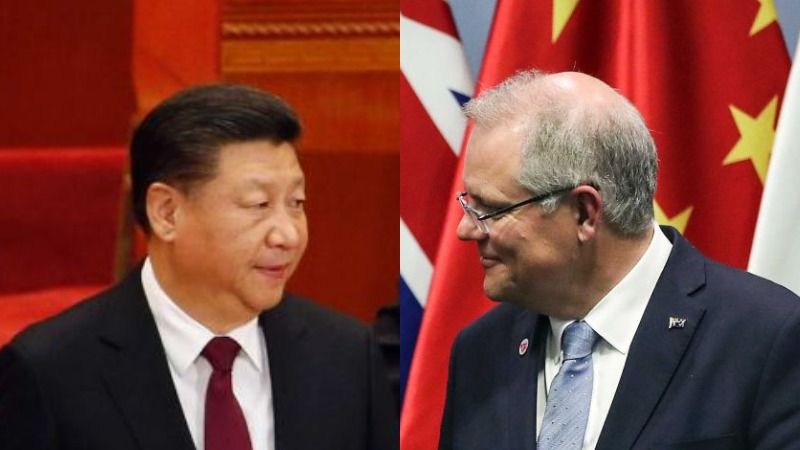
Earlier in November 2020, Communist China slapped Ridiculously high tariffs up to 212.1% on Australian wines. These tariffs were in the response of ongoing trade war between Communist Party of China and Australia. China is the biggest importer of Australian wines making up a whopping 39% of Australia’s total wine export. Australia has already raised concerns at a WTO meeting about China taking measures against its barley, wine, meat, dairy, live seafood, logs, timber, coal and cotton, according to a reuters report.
How did China – Australia trade war begin?
China and Australia shared one of the best times in their relationship after Kevin Rudd from the centre-left Labour party came to the power in Dec 2007. During his leadership Australia decided to pursue appease China policy which included steps such as:
- Chastising Taiwan for its renewed push for independence and reiterating support for a one-China policy in favor of People’s Republic of China. (Source: The Age)
- Signing a A$50 billion deal with PetroChina in 2009 (largest contract ever signed between the two countries) that ensures China a steady supply of LPG fuel until 2029.
- Unilaterally announcing departure from Quadrilateral Security Dialogue to appease China.
Nosediving of China – Australia Relationship
The course of this partnership changed when Julia Gillard from the centre-left Labour Party took over the leadership and initiated closer partnership with United States. This included revival of interest in Joining Quadrilateral Security Dialogue and stationing of US troops near Darwin, Australia.
In 2013, Tony Abbott from centre-right Liberal Party took over the leadership. During his term Australia saw some confusion in its China Policy. His Defence Minister Senator David Johnston told in a statement that Australia is seeking to balance their relationship between China and the United States. It was during his term when Australia and China established a Free Trade Agreement.
However, the relationship between Australia and China took a downturn in 2015 when Malcolm Bligh Turnbull from the centre-right Liberal Party came into power. This is the point in history which has led to current trade war situation between Australia and China.
- Australia became the strongest opponent of China’s territorial claim in South China Sea.
- Banned foreign donations to Australian political parties and activist groups in a move to target Chinese interference in Australian democracy.
- Revived Quadrilateral Security Dialogue with United States (Donald Trump), India (Narendra Modi) and Japan (Shinzo Abe). This was the time when Quadrilateral Security Dialogue saw hope of becoming something bigger as all four countries had centre-right governments who had a clear China Policy.
2019 Onwards: China – Australia Trade War
In 2019, relationship between the two countries further took a dip with Scott Morison from centre-right Liberal party becoming the Prime Minister. During his leadership:
- Australia signed a letter condemning China’s mistreatment of Uyghurs and other minorities.
- Suggested investigating the cause of Covid 19 in April 2020, which resulted into an angry response from China threatening to reduce Tourism and Trade.
- Opposed the Hong Kong National Security Law in June 2020.
- Reiterated its support for ethnic minorities in China and freedom in Hong Kong in October 2020
- Demanded a formal apology from China for posting a fake image of an Australian soldier holding a bloodied knife against the throat of an Afghan child
In conclusion, these continuous attack on China made China so angry that they deliberately leaked a list of 14 points suggesting why China is angry at Australia
China’s attempt at “buying” left wing politicians around the world
Recent trend is suggesting China’s attempt at “buying” influential left-wing politician around the world. In November, 2017 Australia’s Labour Party’s MP Sam Dastyari went against his own party on South China Sea. He later quit his party after he was found of taking financial favours from China.
In 2008, India’s Centre-left party – Indian National Congress signed a Memorandum of Understanding with Communist Party of China. Its contents are still hidden from the Government of India and the people of India.
Recent US Report has shown concern on President Elect Joe Biden not clearing doubts on his China policy.
How Can we Help Australia Post Ridiculous Tariffs on Australian Wines?
In 2020 China has directly or indirectly impacted many of our lives. Some of us have lost our jobs, some of us are taking a reduced salary. In fact, some of us are sitting at home instead of travelling; while some of us have lost our loved ones only because of communist party was incapable of controlling a virus outbreak.
As the entire world is struggling with this virus, Chinese economy continues to be on path of surpassing the US. Therefore, we should pledge to minimize buying Chinese products. It might be impossible to completely boycott Chinese products, but we can at least minimize it.
Install Cultivate Chrome Extension (non sponsored/affiliate link – We are not getting paid to post this). This plugin works on both Google Chrome and the new Microsoft Edge. It helps you understand the origin and seller location of a product on Amazon. It is a great tool to minimize your dependence on Chinese products. If you are lucky, this extension will also suggest some Made in USA alternatives
Buy Australian Wines – Australia desperately needs a new market for its wine and other products. This New Year and Christmas season, we should pledge to celebrate with at least one Australian wine!

Source: en.kremlin.ru
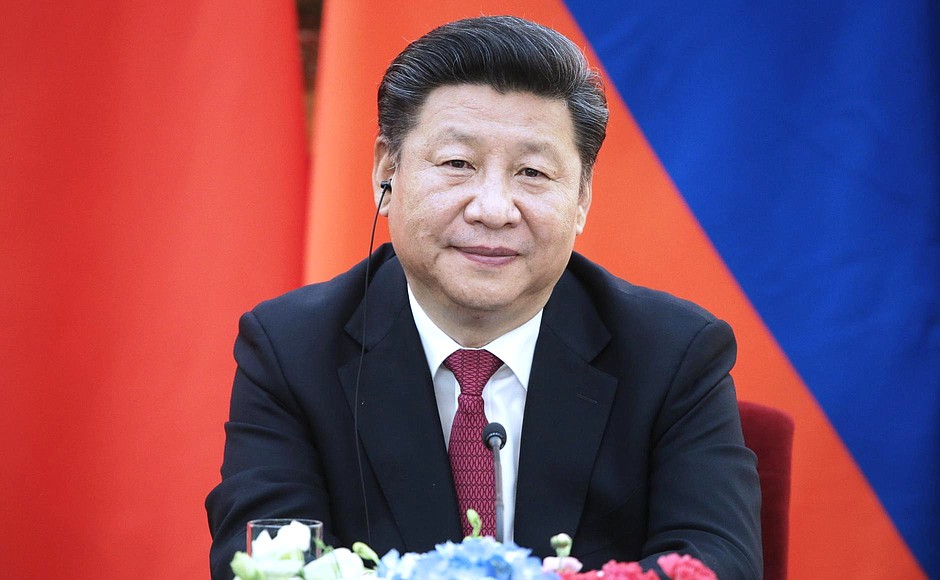
“Watch this man.” These were the three words used by the founding father of Singapore Lee Kuan Yew to describe a relatively unknown Xi Jinping while he was yet to become the President of the People’s Republic of China. Today, in addition to being China’s “paramount leader”, Xi is arguably the most powerful man in the world, and even if leaders across the world were doubtful about it till now, the developments in the previous week were sure to make them think again.
19th Party Congress: How it unfolded
Xi today, Xi forever?
The Communist Party of China assembled the previous week for its 19th Party Congress, a political summit that takes place every five years to decide upon the country’s future and the future is precisely what Xi has fixated his eyes upon. According to the current rules, Mr Xi must step down as the leader when his term ends in 2022 and as tradition dictates, a successor must be appointed. While only time will reveal whether Mr Xi steps down from the presidency at the end of his term, it increasingly looks that he is not keen to do so, having failed to hint towards any successor for the time being. His apparent intentions to stay put were further solidified with the appointment of the new members to the Politburo Standing Committee, the highest decision making authority in the country after the president. Each of the members appointed to the body is over 60 years of age, which means that they are highly likely to retire when their term comes to an end with the next meeting five years later. Interestingly, two-thirds of them are also known to be Mr Xi’s loyalists.
Xi Jinping Thought: A force to be reckoned with
“Xi Jinping Thought on Socialism with Chinese Characteristics for a New Era” or the “Xi Jinping Thought” for short was written into the party’s constitution at the end of the Congress. The thought consists of 14 principles calling for deep reforms, conserving the environment, the party’s complete control over the army, and the importance of the unification of the country. The development was highly publicised and with good reason. With the “Xi Jinping Thought” embedded in the constitution while still being in power, Xi Jinping has drawn comparisons from all over the world to Mao Zedong himself. Moreover, he has ensured that anyone that opposes him will do so at the cost of their removal from the party. When Xi asked the delegates at the end of his address for any objections, shouts of “meiyou” which means “none” rang through the Great Hall of the People.
Mr Xi has declared the start of a “new era” for China, and undoubtedly for the entire world. It is therefore important to ask what significance these developments hold for the country and for the world at large.
What this means for China
The inclusion of Xi’s thought in the constitution means that the same will be taught in schools, colleges, and other institutions throughout the country, infusing his ideology among the Chinese on a cultural level. Abraham Denmark, director of the Asia program at the Wilson Center puts it aptly when he says that the move “greatly increases, … broadens, and deepens Xi Jinping’s personal power within the Chinese system”.
The president has already found a wide support of the Chinese population with his push for modernisation and his crackdown on corruption has been hugely popular among the masses. Since his election in 2012, Mr Xi’s anti-corruption drive, famously known within the country as the “tiger and flies campaign” has either disciplined or expelled nearly a million party members. As his stance on corruption remains as stern as ever, many have come to view it as a political tool used by him time and again to get rid of political rivals. However, the corruption drive has undoubtedly proved to be effective and fruitful for the country’s business climate.
While Mr Xi’s crackdown on corruption has garnered immense coverage, the crackdown on humans rights activists and NGOs has not received its fair share. China has struggled for decades in its battle for free speech. In 2015, many human rights lawyers were detained and many international NGOs faced stricter curbs to keep them from functioning. As the president has left little room for any opposition within the party, the authoritarianism and censorship are by no means expected to be relaxed, ensuring that there is no opposition from outside the party as well.
Powerplay: China’s standing on the global stage
Donald Trump was among the world leaders who wished the Chinese president when he congratulated him on his “extraordinary elevation”. The reverence he holds for Mr Xi was quite apparent when he said: “some people might call him the king of China.” The surprise, however, came when North Korea’s Kim Jong Un congratulated the president on his “great success” since the two leaders are not known to be fond of each other. The intent here is clear. Both sides need a China that is continuously growing in power on their side in their stand against each other, and that means a closer association with Mr Xi. Chinese influence in the world is unlikely to stop there.
While speaking to CNN, James McGregor, author of “No Ancient Wisdom, No Followers: The Challenges of Chinese Authoritarian Capitalism”, mentioned that “given the chaos in Washington and also the dysfunction in Europe, the world is looking for leadership.” Mr Xi enjoys a great level of stability and largely unquestioned authority in a time where the leaders of Western democracies face intense competition at home. As such, his message to his party and to the world is clear: in the coming decades, China will “stand proudly among the nations of the world” and “become a leading global power. ” However, it will do so on its own terms, emphatically rejecting the Western political models.
These intentions are perhaps best evidenced by The Belt and Road initiative, China’s attempt at connecting Europe, Asia, and Africa with each other through a modern take on the Silk Route, into which it has already pumped hundreds of billions as loans and aid to countries across all three continents. While the project has been met with opposition from Japan, India, and the USA, many of China’s neighbours have expressed their support for it, which speaks of its influence on the global stage.
With the people’s army under the control of the party, Mr Xi also looks to achieve the twin goals of increasing the military might and the protection of China’s sovereignty. “We will not tolerate anyone, using any means, at any time to separate one inch of land from China”, he said in his address which is seen as a warning to both Hong Kong and Taiwan. Enhancing combat capability is also linked to the Chinese interests in the South China Sea, where its activities of building and militarisation of islands have received backlash from the international community.
“If one is big”, Mr Xi said on the final day of the Congress, “one must act big.” There’s no doubt that Mr Xi intends to put these words into action at the global level. Lee Kuan Yew once rightly pointed out about China that the world would do well to remember: “The size of China’s displacement of the world balance is such that the world must find a new balance. It is not possible to pretend that this is just another big player. This is the biggest player in the history of the world.”
References:
http://www.cbc.ca/news/world/china-congress-xi-jinping-petricic-1.4371251
https://www.theatlantic.com/international/archive/2017/10/china-xi/544035/
Test
Industrial masking products improve surface finishing

Recent Books by Boaventura de Sousa Santos: Law, Colonialism, and the Future of Europe

Travel wellness tips for a healthier and more enjoyable journey
